
Choose a video production studio by what your finished track needs on screen, then compare creative control, total cost, delivery dates, and final files. A soundstage rental does not automatically include a crew or an edit. This guide helps you choose between physical facilities, full-service production, and remote direction.
- Rent a physical stage when the concept depends on real performance or interaction with a set. Space alone does not provide a finished video.
- Compare complete project scopes. A low rental rate can leave crew, equipment, and post-production outside the quote.
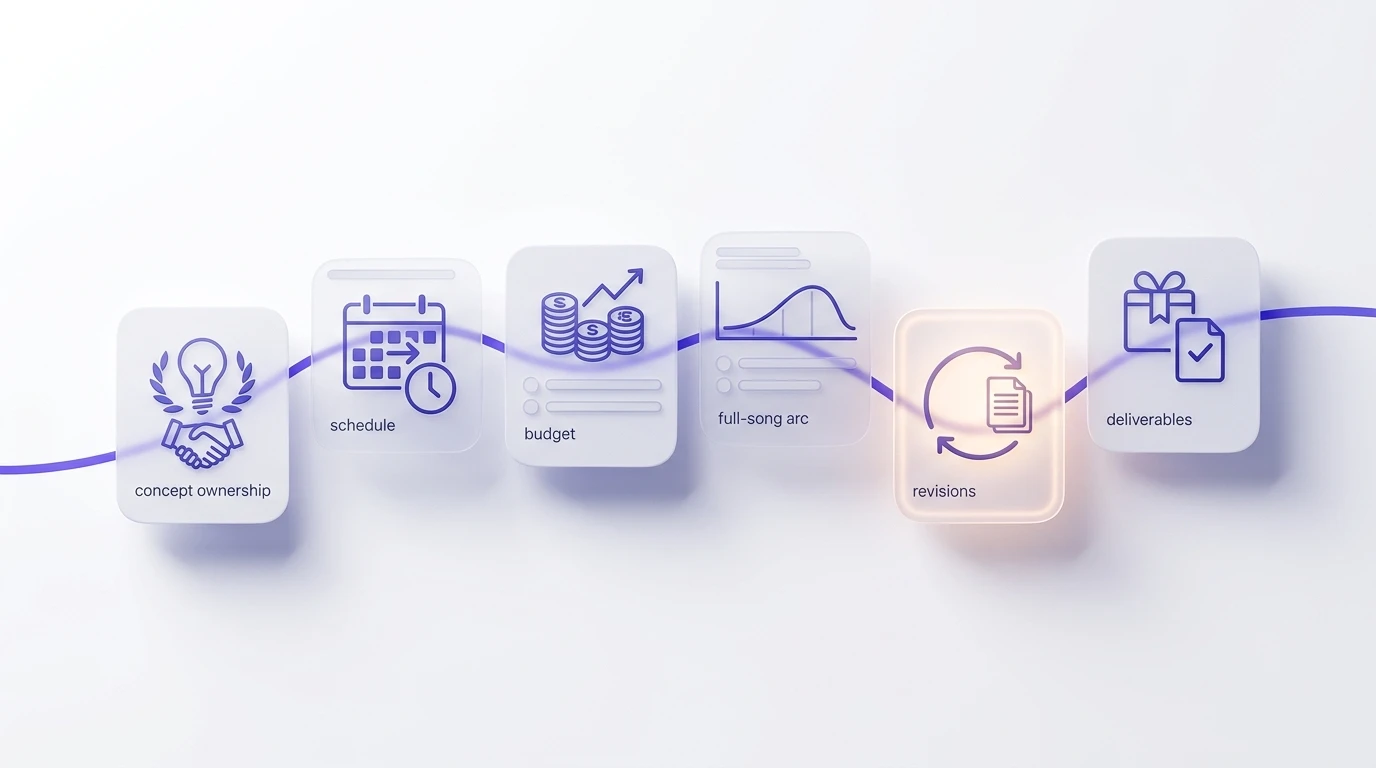
- Require a full-song master, clearly specified social adaptations, and written terms for refinements and file rights before booking.
What should artists compare before choosing a video production studio?
Start with the concept and the finished deliverables. Establish whether the video needs your actual performance, what you can spend on the complete production, and when you need approved files.
Creative control needs a name attached to it. Who writes the treatment, approves the visual direction, and resolves a scene that does not work? Our guide to choosing a video production company explains how to assess that responsibility before comparing proposals.
Ask to see complete music videos. A reel can hide weak pacing. Watch what happens when the chorus returns: does the visual idea develop, or does the editor simply reuse attractive shots?
Use this matrix to compare typical scopes. These models overlap: a full-service company can hire either a conventional stage or a virtual-production facility.
| Selection criterion | Physical soundstage rental | Virtual-production facility | Full-service production company | Remote directed workflow |
|---|---|---|---|---|
| Creative control | Artist or hired director leads | Director leads; technical team shapes feasibility | Company leads within an approved treatment | Director leads within an approved visual direction |
| Set access | Physical space; construction may be separate | Green screen or LED wall; digital environments need preparation | Locations or stages arranged within scope | Usually no physical set |
| Equipment | Confirm cameras, lighting, and power separately | Specialist systems may be included; camera package varies | Equipment selected and quoted for the concept | Visual-generation and editing tools; filming only if specified |
| Staffing | Crew usually booked separately | Stage technicians may be included; creative crew may not be | Production and post-production roles managed together | Direction and post-production; confirm any capture needs |
| Turnaround | Depends on preparation, bookings, and post | Requires environment preparation and testing | Depends on shoot logistics and edit scope | Depends on intake, direction approval, and refinements |
| Pricing | Rental plus variable production costs | Facility costs plus specialist preparation | Fixed project quote or itemized variable costs | Can be fixed when deliverables and revision limits are defined |
| Deliverables | Space access; finished files generally separate | Capture services as contracted; final edit may be separate | Masters and adaptations specified in the agreement | Full-song master and adaptations as specified |
A clear quote identifies both inclusions and exclusions. “Studio included” tells you little about who supplies the camera operator or completes the color grade.
How do soundstages, virtual studios, and remote production differ?
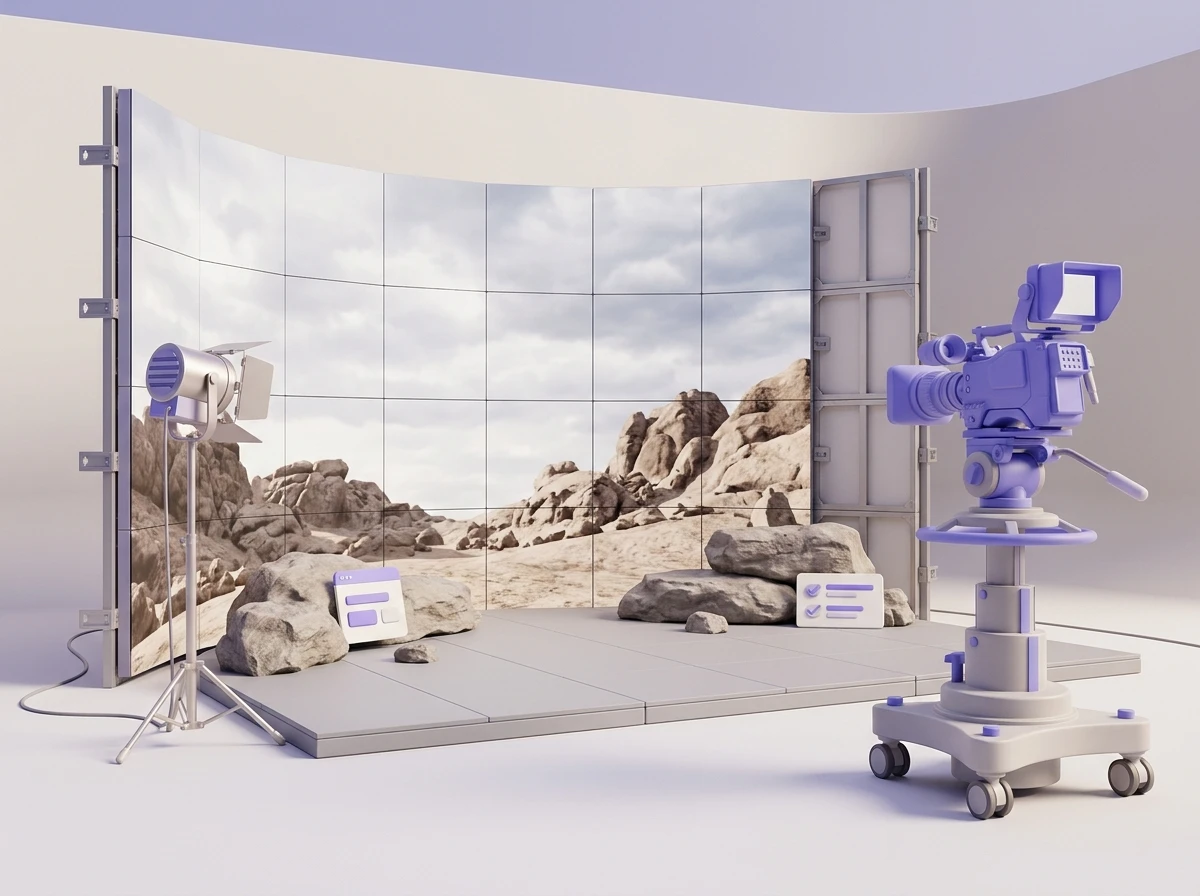
A soundstage provides a controlled shooting environment. Virtual production adds digital backgrounds to a capture workflow. Remote direction can create and edit a visual world without booking a physical stage.
Physical soundstages suit performance capture and constructed sets. A cyclorama, the curved wall that creates a continuous-looking backdrop, gives you a clean surface to light. It still needs lighting crews and preparation; an empty white room will not produce a cinematic image by itself.
Green-screen studios capture performers against a background that post-production replaces. Clean edges depend on lighting, subject separation, and careful capture. Hair, reflective clothing, and motion blur can increase compositing work.
LED-wall studios display backgrounds during filming. Epic Games’ virtual-production resources explain how real-time digital environments support these workflows. Depending on the shot, the setup may require camera tracking and specialist technicians; test for visible pixel patterns and unwanted reflections before committing to the look.
A full-service video production company manages the project rather than merely supplying the room. Confirm whether its scope includes art direction and the complete post-production process. A production company can still leave visual effects or social adaptations outside its base quote.
A remote directed workflow builds the video around the finished track and an approved treatment, using the visual methods specified in the scope. At SongTrailer, our AI music video service for artists combines AI-assisted visuals with human direction and editing. One creative director takes responsibility from the brief through the final edit.
Remote production removes the need to coordinate a stage booking. It introduces different constraints: generated scenes need continuity checks, and synthetic imagery may struggle with exact choreography or fine physical interactions.
Which studio model fits each music-video concept?
Choose a physical stage if the audience needs to see you perform. Choreography, instrument playing, and interactions between performers benefit from real capture. A controlled stage also makes sense when lighting changes drive the concept or the set itself carries the story.
Choose a virtual stage when real performers must inhabit a digital environment and the background needs to influence the captured lighting or camera perspective. Skip it when a simple backdrop would achieve the same result. An LED wall adds little value if the final edit barely shows the environment.
Choose a full-service company when a filmed concept requires coordinated production and you need someone to own those logistics. This suits projects involving casting or location management. Scrutinize any proposal that promises production management but leaves the final edit with an unspecified supplier.
Choose remote direction when the track calls for an atmospheric, stylized world and literal performance capture is optional. This can suit a finished single with an approaching release date, provided the visual direction is ready to lock.
Renting a stage can add cost without improving a concept. If the entire video consists of imagined environments with no live performer, paying for physical space may solve a problem the project does not have.
For an EP campaign, choose the visual rules before commissioning each video. Consistent color treatment and recurring imagery can connect releases without requiring the same set every time.
What limitations and hidden charges deserve scrutiny?
The largest quote gaps usually sit between the booked service and the release-ready video. Confirm the complete production path, including what happens when the approved scope changes.
Stage time and equipment costs
Ask whether the rental period includes load-in, lighting setup, and teardown. Check overtime terms and whether equipment insurance is required. Confirm who pays if a delayed setup pushes capture beyond the booked hours.
Request the actual camera package and lighting scope. Lens choice and lighting affect the image; a camera model alone cannot tell you whether the production will achieve your references.
Post-production and refinement rounds
Separate the edit from color grading and visual effects in the written scope. Ask whether cleanup work, green-screen compositing, and replacement shots are included. Our music videography guide from treatment to final master follows those stages so you can identify gaps before approving a quote.
Define a refinement round before paying. Establish how feedback is submitted, how many rounds are included, and whether a new concept counts as a scope change. Replacing an approved visual world is different from adjusting the timing of an existing shot.
Delivery dates and platform files
A production timeline needs a defined starting point. Ask whether it begins at payment, receipt of complete assets, or approval of the treatment.
SongTrailer’s flat package costs $3,500 and delivers a full-song master plus a social-ratio adaptation in about 5-7 business days after intake and direction lock. That schedule depends on reaching the approval point; it should not be read as starting automatically from the first inquiry.
Specify the destination for each file. YouTube identifies 16:9 as its standard desktop aspect ratio in its recommended upload encoding settings. A social adaptation needs its own framing review: cropping a wide master can remove the performer or break a carefully composed scene.
File ownership and usage rights
Get written terms for the delivered masters and their permitted uses. Clarify whether project files and unused footage are included or excluded. Possessing an exported video does not necessarily give you rights to every underlying asset.
For AI-assisted work, separate file ownership from copyright claims. The U.S. Copyright Office’s AI copyright guidance distinguishes protectable human authorship from purely AI-generated material. Ask how the agreement handles generated visuals and any third-party assets, especially if a label requires specific rights assurances.
Frequently Asked Questions
How much should a three-minute music video cost? Runtime alone cannot determine the price. A continuous performance and a effects-heavy narrative can have the same length but very different production requirements, so request a quote against an approved concept and complete delivery scope.
How much does a video production company cost? The cost depends on what the company takes responsibility for, including filming and post-production. Compare total project quotes with matching deliverables rather than comparing a facility’s rental rate with a finished-video package.
Do I need to rent a studio for a music video? Only if controlled space serves the concept. A location shoot or remote directed workflow may fit better when a physical set contributes little to the final image.
Does studio rental include editing? Do not assume it does. Confirm whether the agreement covers facility access only, capture services, or a completed master with platform adaptations.
Book the production model that serves the song. If a human-directed, AI-assisted visual world fits your release, contact SongTrailer about your music-video project with the finished track and target date. Bring a clear concept and file requirements so the scope can be judged against what you actually need.