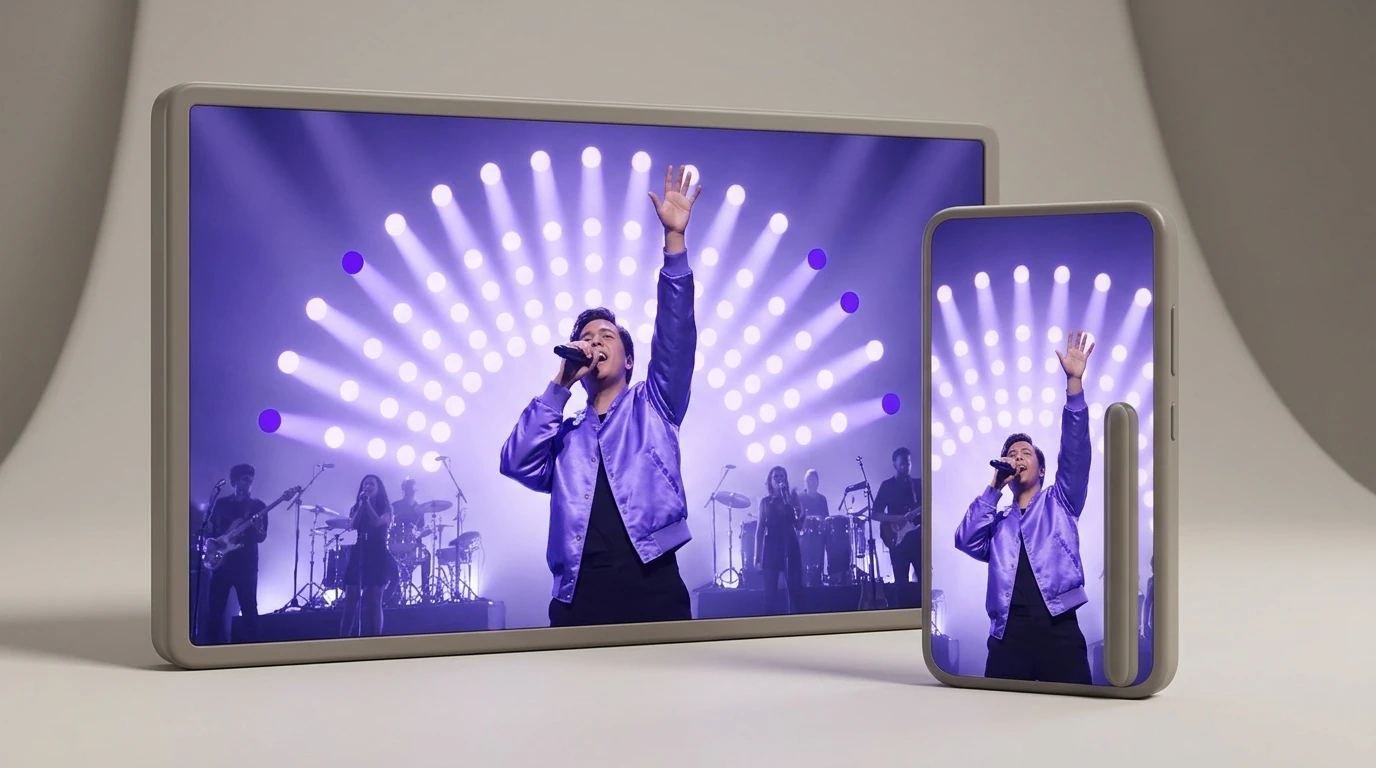
In Michael Jackson’s Beat It music video, two rival gangs square off, then end up dancing in the same formation. Jackson steps between their leaders in a red jacket and gives both sides a rhythm to follow. Watch who moves together when the chorus returns. That’s how the film shows the feud ending.
- Watch the official short film for the full sequence, from the groups gathering separately to the final dance.
- Compare the guitar solo at the standoff with the returning chorus. The leaders react to each other during the solo. The whole group hits the beat together in the finale.
- Before locking your own ending, mute the vertical preview. Check that you can see who changes direction and who joins them.
The Official Beat It Music Video
Watch Michael Jackson’s official “Beat It” short film for the version with the rival gangs and the dance finale. An audio upload gives you the recording. A lyric video puts the words on screen. The official film shows what happens between the people hearing the same beat.
The Museum of Modern Art’s music video program credits Bob Giraldi as director and Michael Peters as choreographer of the 1983 video. In Giraldi’s interview with Boards, he identifies Peters and fellow dancer Vincent Paterson as the performers who played the rival leaders. Jackson also recalled casting members of real Los Angeles gangs in his memoir, Moonwalk. The reconciliation is part of the story on screen.
From Rival Groups to One Formation
The final dance resolves the feud because the people who were facing each other now face the same way. You can read that change without hearing a word.
| Story beat | What you see | What changes |
|---|---|---|
| Separate groups | The gangs gather apart before converging. | The film establishes two sides before they share a space. |
| Face-off | The leaders square up while the others watch. | Attention narrows to the space between the two leaders. |
| Intervention | Jackson steps into that space in his red jacket. | Both sides have someone else to watch. |
| Unison | Jackson leads a shared formation through matching steps. | The rivals move in the same direction on the same count. |
The red jacket is a visual anchor. You’ve already seen Jackson in it before he steps between the leaders, so your eye can find him when the frame fills with dancers. The crowd changes shape. The person you’re following stays easy to spot.
Keep your eye on the people around him, too. If the film cut from the standoff to Jackson dancing with an unrelated crew, the fight would simply stop. Seeing the rivals take up the same steps is what gives the dance a consequence.
How the Track Carries the Turn

Listen to the guitar solo over the confrontation. Its sharp bends and quick runs keep the scene taut while the leaders circle and react to each other. When the sung “Beat it” refrain returns, the dancers land their accents together. The pulse that carried the face-off now holds a formation in sync.
The hook has already played by then. That’s the useful part for anyone building a pop video from visual concept to final cut: a repeated chorus can feel different because the people on screen behave differently. The earlier sections give the viewer time to learn the rivalry. By the last chorus, a shared step is enough to show that it’s over.
How to Plan a Full-Song Ending
Start with the finished track. In the music video workflow from treatment to final master, put the turn in the treatment, the written plan for what happens on screen. Give the director and editor a cue they can both point to.
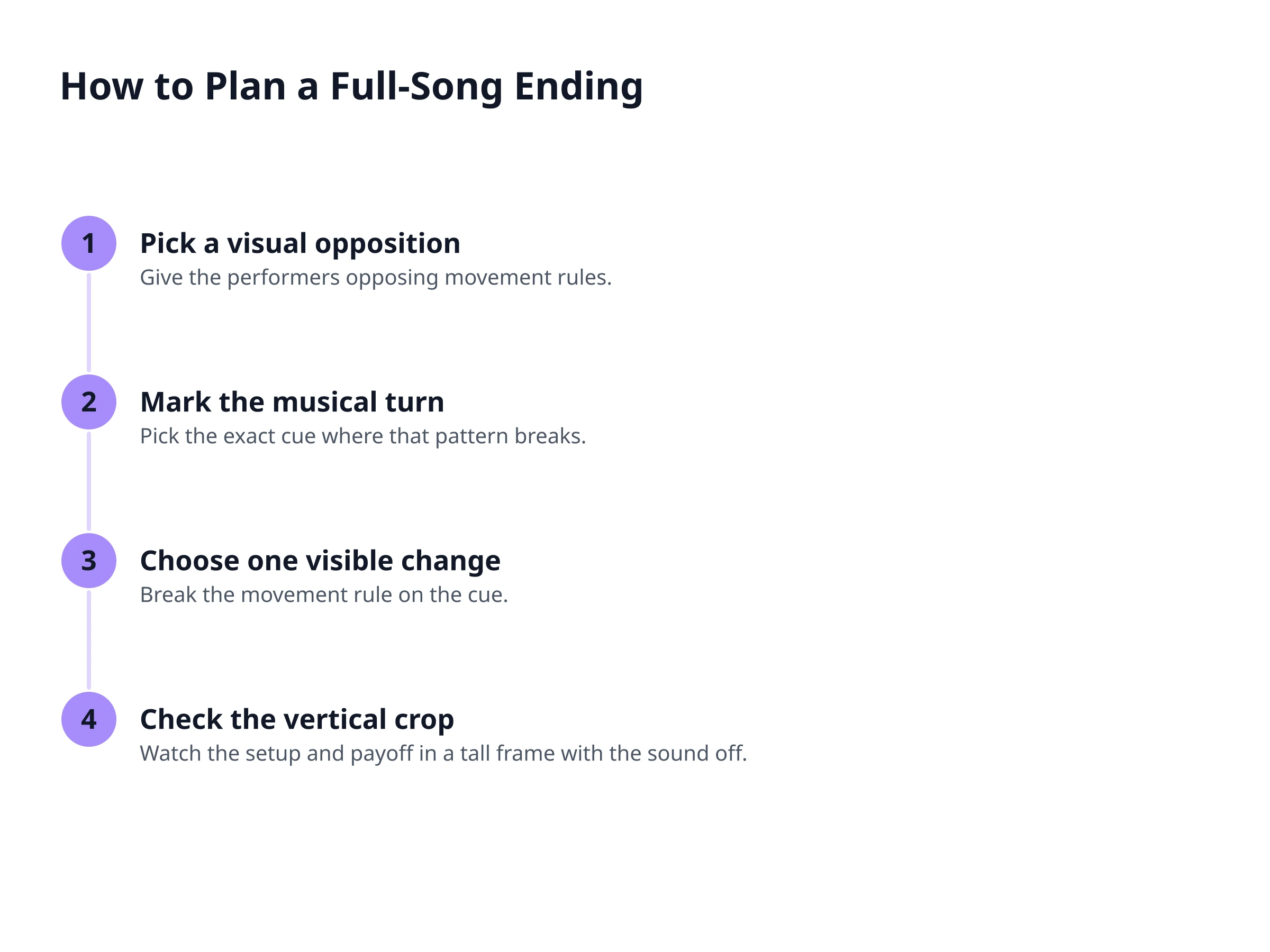
- Pick a visual opposition. Give the performers opposing movement rules. For a single about drifting apart, stage two people passing in a hallway, walking in opposite directions without looking at each other.
- Mark the musical turn. Pick the exact cue where that pattern breaks. If the final chorus returns after the drums drop out, mark the first beat of that chorus on the finished track.
- Choose one visible change. Break the movement rule on the cue. Instead of passing, have one performer turn so both walk toward the same door. Hold the shot until their shared direction is clear.
- Check the vertical crop. Watch the setup and payoff in a tall frame with the sound off. If the crop loses one performer, stagger them front to back with a slight offset so you can see both bodies and the turn.
Frequently Asked Questions
Was the “Beat It” video inspired by West Side Story?
The resemblance is easy to see, but the source of the concept is disputed. Billboard’s April 1983 coverage described imagery borrowed from West Side Story, while Bob Giraldi denied that it inspired his concept.
Who played the guitar solo in “Beat It”?
Eddie Van Halen played the solo on the recording. The film keeps the confrontation on screen over the solo, so the guitar scores the action rather than pulling your attention away from it.
Does a music video’s visual payoff have to land on the final chorus?
No. A bridge, a cut to silence, or an outro can carry the payoff if the change in the track gives the action room to register. If the song ends abruptly, place the turn early enough for the viewer to see how the other performer responds.
Put the hallway turn in the brief as a cue and an action: first beat of the final chorus, both performers head for the same door. At SongTrailer, one creative director carries that decision from the brief through the full-song master and social-ratio adaptation. Reach out to our creative team with the finished track and the moment you want the audience to see.