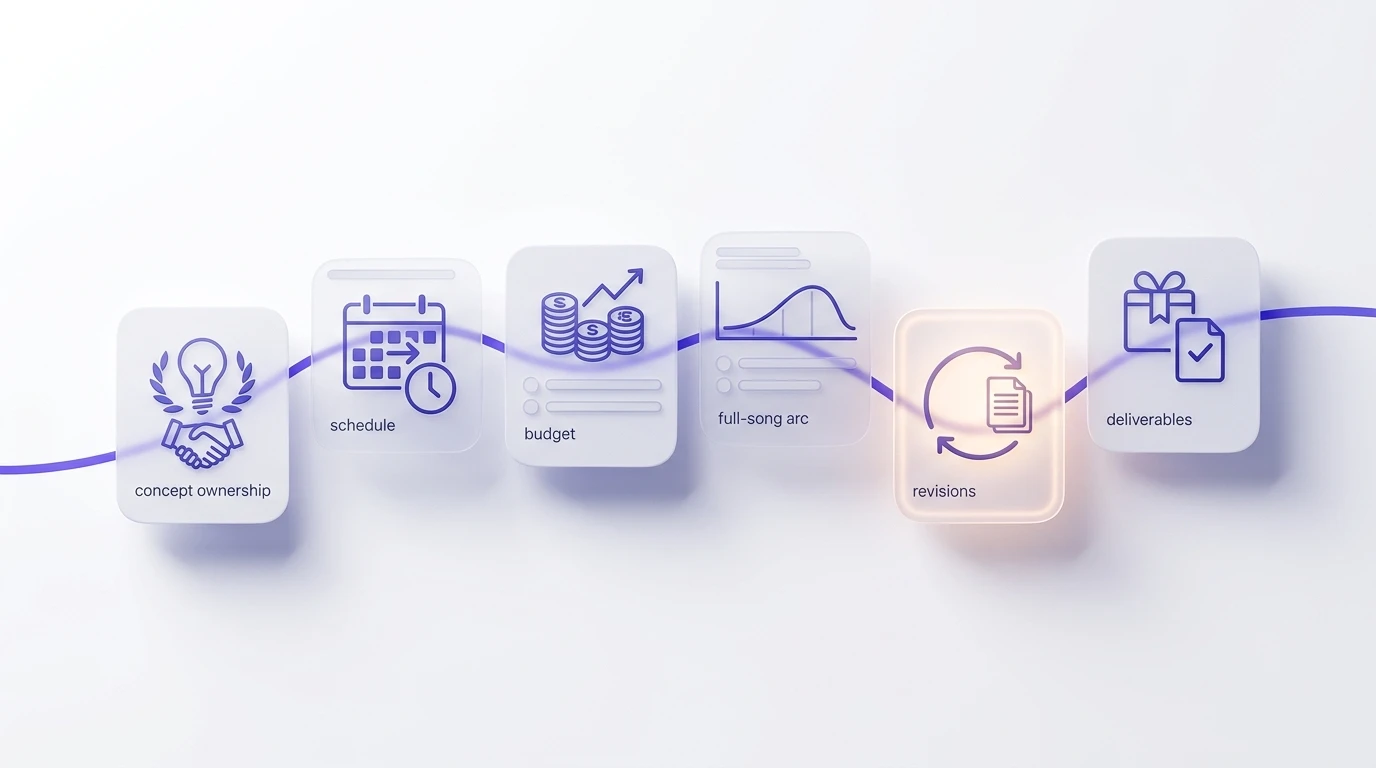
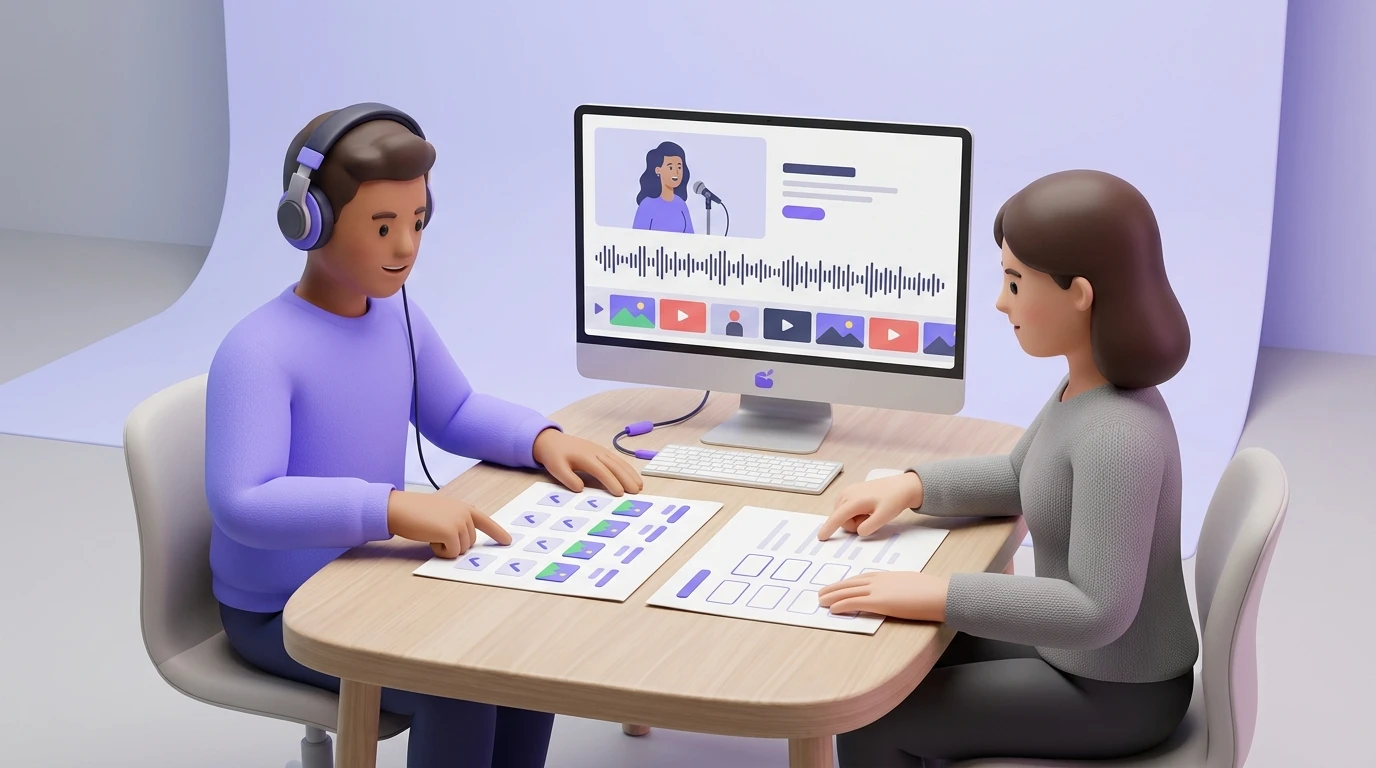
Compare video production services by creative accountability and the written production scope. For a finished single, prioritize visual continuity, total cost, and a delivery date tied to approvals. A full-song master covers the entire track. This comparison helps you choose a production route without mistaking a polished showreel for release-ready delivery.
- Ask who owns the full-song edit and final delivery. A crew list alone does not establish creative responsibility.
- Approve a treatment and continuity rules before production begins. Changes to the visual world can force reshoots or regeneration.
- Compare quotes against the same deliverables, including social adaptations and refinement rounds. Confirm file rights separately from access to editable source files.
Which criteria should music artists compare first?
Creative ownership comes first. Identify the person responsible for turning the finished track into a coherent video, including the pacing between verses and choruses. That person should also resolve conflicting feedback and approve the final visual treatment.
A showreel demonstrates attractive moments. A complete music video reveals whether the director can sustain an idea through quieter passages, repeated hooks, and an ending. Our guide to choosing a video production company explains how to assess providers beyond their strongest montage.
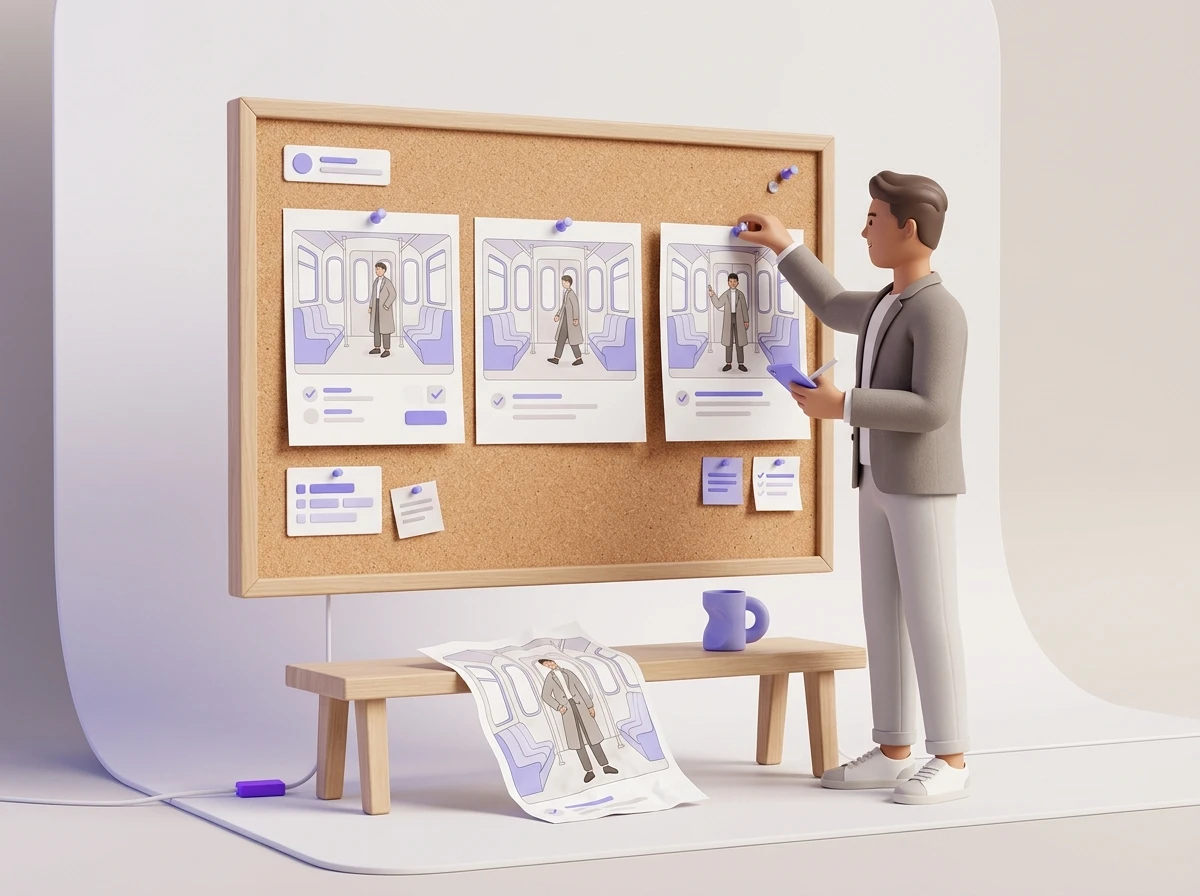
Ask for a treatment, meaning a written creative plan for the video. It should describe the visual world and explain how it develops across the song. “Cinematic and dark” leaves too much open; a recurring character in a deserted train carriage gives production something specific to build.
Then establish continuity rules. If that character wears a red coat, decide whether its appearance stays fixed, whether the carriage changes, and what happens when the chorus returns. These choices affect filming and animation just as much as generative visuals.
The commercial test is equally concrete: who approves the treatment, what counts as a revision, and what files arrive by the agreed date? Compare responsibility alongside price. A cheaper quote can leave the artist managing work that another supplier includes.
How do video production services compare by production route?
Full-service shoots, freelance crews, animation, and human-directed AI production solve different creative problems. None automatically guarantees a complete release package.
The table uses qualitative scores, not audited provider ratings. Strong means the production model usually supports that criterion directly. Conditional means the proposal must establish it. Variable means coordination or execution can change the outcome substantially.
| Criterion | Full-service shoot | Artist-managed freelance crew | Animation studio | Human-directed AI-assisted production |
|---|---|---|---|---|
| Concept ownership | Strong: director-led | Conditional: hire a creative lead | Strong: treatment-led | Strong: when a director owns the edit |
| Scheduling | Conditional: shoot dependencies | Variable: separate calendars | Conditional: asset approvals | Conditional: direction lock and generation |
| Low artist crew burden | Strong: producer coordinates | Variable: artist may coordinate | Strong: studio coordinates | Strong: centralized direction |
| Low location dependence | Variable: concept-dependent | Variable: concept-dependent | Strong: no physical set needed | Strong: no physical set needed |
| Visual consistency | Strong: controlled capture | Conditional: shared shoot plan | Strong: reusable designed assets | Variable: generated details can drift |
| Revision structure | Conditional: contract-defined | Variable: separate agreements | Conditional: staged approvals | Conditional: refinement scope |
| Masters and adaptations | Conditional: specify exports | Conditional: assign delivery owner | Conditional: specify exports | Conditional: specify exports |
| Pricing predictability | Conditional: exclusions matter | Variable: separate invoices | Conditional: locked asset scope | Conditional: fixed scope matters |
A full-service shoot usually combines pre-production with filming and post-production under one producer. Freelancers can cover the same work, but someone must connect their responsibilities. Hiring a camera operator does not automatically include a treatment, editor, or delivery manager.
Animation builds imagery through designed assets and motion. Generative production creates visual material with AI tools, then relies on direction and editing to shape it into a song-length piece. Generation is only part of the work. Shot selection and color grading still determine whether the final video feels coherent.
For a closer look at those handoffs, music videography from treatment to final master covers the production sequence. Use it to check which stages a quote actually includes.
Who is each production route best suited to?
Choose a full-service shoot if the artist’s real performance carries the concept. Choreography, band interaction, and recognizable locations benefit from physical capture. Skip this route if the proposed shoot depends on permits or travel that your release schedule cannot absorb.
Choose a freelance crew if you can produce the project yourself or hire a producer. This route gives you control over individual collaborators and can suit a tightly planned performance video. Skip it if you expect the camera operator to manage everything from casting through final exports without that responsibility appearing in the agreement.
Choose animation if the song needs a designed world with repeatable characters or objects. A video production studio specializing in animation can preserve those elements through reusable assets. Skip it if you expect major character redesigns late in production; changes can affect rigging, motion, and compositing across the whole edit.
Choose human-directed AI-assisted production if the concept benefits from stylized environments without a physical shoot. It suits finished tracks that need a complete visual world on a defined production schedule. Skip it if exact likeness, readable signage, or intricate repeated movement is essential and the provider cannot demonstrate those requirements.
At SongTrailer, a creative director owns the concept through the final edit, combining AI-assisted visuals with human direction. Our AI music video service for artists focuses on full-song delivery. It is a distinct production route, rather than a substitute for filming a real performance.
What limitations and hidden costs should you expect?
A useful quote defines both the included work and the cost of changing it. Request separate treatment of creative changes and corrections. Replacing an approved concept has different consequences from fixing an export error.
For live-action production, check whether the price includes location fees and talent. Travel, equipment rentals, or overtime may sit outside the headline figure. Ask who can authorize additional spending before the shoot begins.
For animation, check whether character design and asset building are included. For AI-assisted production, ask what happens when a generated sequence breaks continuity: does the provider regenerate it within the agreed scope, propose a different shot, or charge for additional work?
Refinement rounds need boundaries. A round might mean one consolidated set of notes on a complete edit, while feedback sent separately by an artist and label could create conflicting instructions. Name one feedback owner and ask whether later concept changes reopen the budget.
SongTrailer’s $3,500 flat package includes a full-song master and a social-ratio adaptation. When comparing that scope with another quote, confirm that both cover the entire track and the required adaptation. A teaser price is a different purchase.
Rights require their own check. The U.S. Copyright Office’s copyright basics guidance distinguishes ownership of a copy from ownership of copyright. Your agreement should state the permitted uses of the delivered video and whether any included assets carry restrictions.
AI-generated material adds a separate issue. The U.S. Copyright Office’s AI copyright guidance explains the role of human authorship in copyright protection. A supplier can transfer rights it holds, but a contract cannot guarantee copyright protection for every generated element.
Editable source files are a separate deliverable. Confirm whether the handoff includes project files and working assets, or only rendered videos. Also check whether third-party licenses permit those assets to be transferred.
How do you protect the release date and final delivery?
A production timeline is useful only when its start point and approval dependencies are explicit. A promise measured from “project start” leaves room for disagreement about when work actually begins.
SongTrailer’s stated turnaround is about 5-7 business days after intake and direction lock. That condition matters. An unfinished audio master or unresolved concept delays the point at which the production schedule can begin.
For any provider, work backward from your publication date. Allow time to review the full cut and test the delivered exports before uploading. Name the person accountable for production delivery and the person authorized to give final approval.
Request a schedule with treatment approval and edit review clearly identified. Our recommendation is to approve representative visuals before the provider builds the entire video, particularly when character consistency or an unusual animation style could become a late-stage problem.
Define the files precisely. A full-song master covers the complete track in the agreed primary format; a social-ratio adaptation reframes that video for another aspect ratio. A shortened promotional cut is a separate deliverable unless explicitly included.
Adaptation needs editorial attention. YouTube’s aspect-ratio guidance explains that its player adjusts to different video shapes, but an automatic crop can still remove the subject or ruin a composition. Ask the editor to review framing shot by shot.
Technical delivery also needs an owner. YouTube’s recommended upload encoding settings provide a concrete reference for upload files. Confirm who checks those exports, whether the final audio master is used, and who fixes delivery errors before release.
Frequently Asked Questions
What are video production services? Video production services cover the work needed to plan, create, and finish a video. For music artists, that can include treatments, filming or animation, editing, and delivery of a full-song master, but the contract determines what is actually included.
How much should a 3-minute music video cost? Runtime alone does not establish a useful price. A location-free visual concept and a performance shoot with paid talent have different production requirements, so compare quotes using the same creative scope and final deliverables. Published examples of what different prices include are in the 2026 cost guide.
Is AI going to replace videographers? AI can replace parts of visual creation for concepts that do not require physical capture. Recording a real performance still requires filming, while an AI-assisted video needs accountable direction and editing to become a coherent finished piece.
Do music video packages include source files? Do not assume they do. Rendered masters and editable project files are different deliverables, and working assets may have separate licensing restrictions. Request source-file terms before signing.
Choose the route that fits the song, then put creative responsibility and delivery terms in writing. If your finished single needs human-directed, AI-assisted visuals, get in touch with SongTrailer with the final track and intended release date. Bring the formats you need so the production scope starts with the actual release.