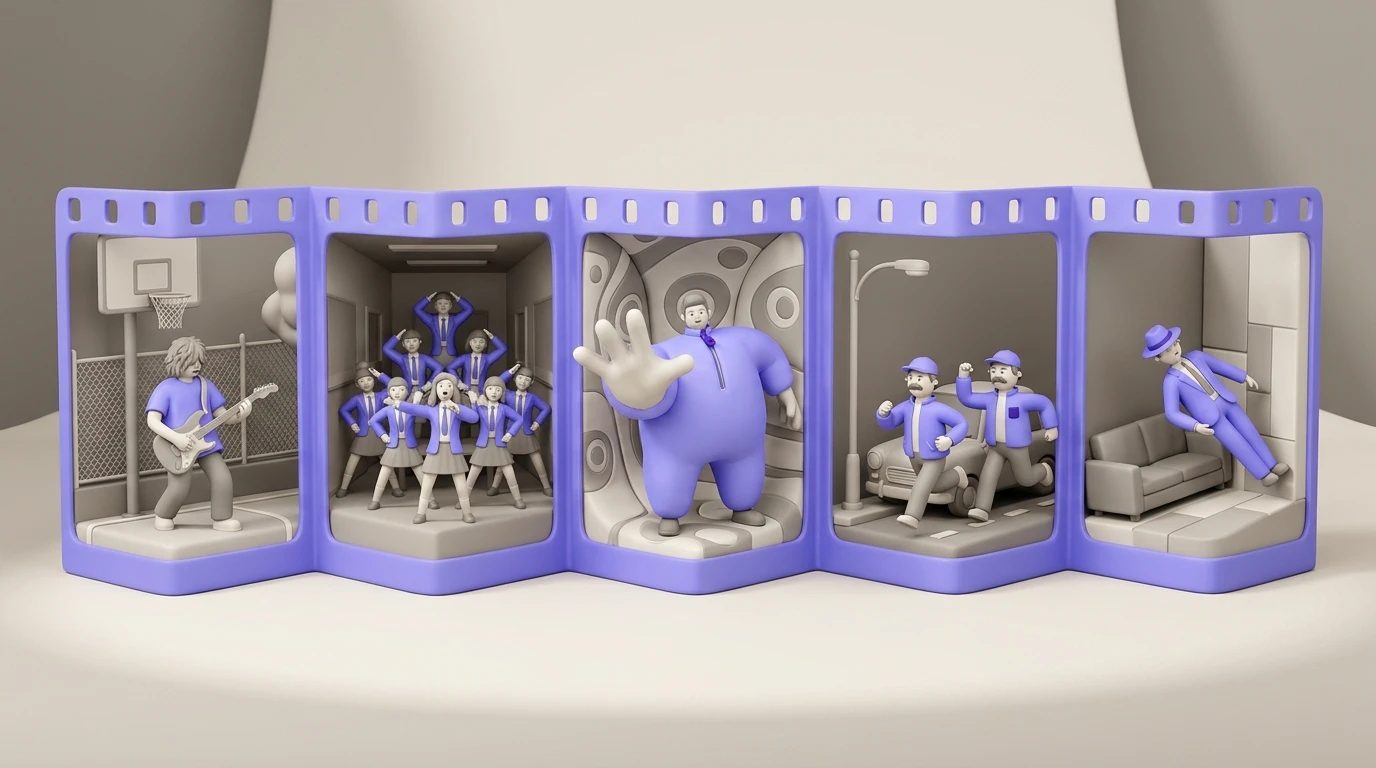
Nineties music videos offer five useful visual approaches: raw performance, choreographed pop, surreal futurism, cinematic stories, and visual illusions. Nirvana’s “Smells Like Teen Spirit” makes a school gym feel combustible. Our guide to the greatest music videos of all time takes the broader view. These five styles reveal directing choices you can apply to a finished song.
- Choose a dominant visual style before collecting references. A performance video and a story-led video need different kinds of progression.
- Borrow the mechanism behind an iconic video, such as escalating crowd energy or distorted perspective. Give it a setting that belongs to your song.
- Plan the final chorus and social crop before production. A striking opening still needs somewhere to go across the full track.
Raw Performance: Let the Room Build Pressure
Raw performance videos make the artist’s physical presence carry the song. The location establishes the mood, then movement and editing push that mood toward a breaking point.
In Nirvana’s official “Smells Like Teen Spirit” video, the gym gives the performance a familiar structure that gradually loses control. The crowd becomes part of the release. Samuel Bayer’s direction makes the setting feel oppressive before it feels chaotic.
Borrow the escalation. For an artist with a finished track and limited shoot resources, a single room can support a full-song video if its behavior changes with the arrangement. A distant verse performance might become an uncomfortably close chorus, with the final section allowing movement that earlier shots held back.
Avoid confusing roughness with a lack of direction. Random handheld footage gives the editor fewer meaningful contrasts than a controlled opening that earns its eventual disorder.
Choreographed Pop: Make the Hook Visible
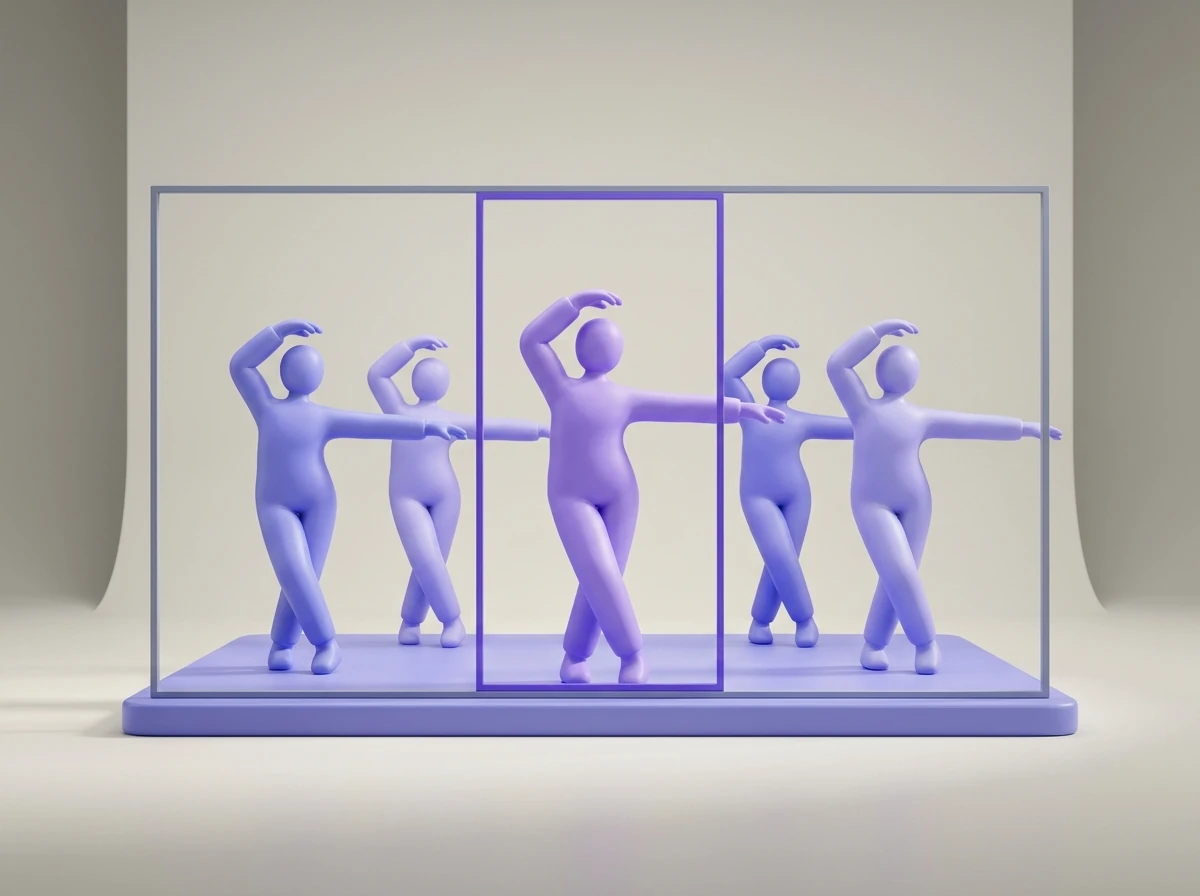
Choreographed pop videos give the chorus a physical identity. A gesture, formation, or change of setting helps the audience recognize the musical hook before they consciously think about it.
Britney Spears’ “…Baby One More Time” connects its school setting to group choreography and a clear lead performance. The dancers frame Spears rather than competing with her. For a deeper study of movement as an artist’s visual language, our breakdown of Janet Jackson’s music videos follows that approach across her eras.
The useful lesson extends beyond dance-heavy pop. A solo artist can repeat a distinctive movement at each chorus, then change its framing as the song develops. The repetition gives the viewer something to anticipate.
Rehearse for the camera position. A gesture that reads clearly in a close shot can disappear in a wide frame, while a formation built for a landscape master may lose its outer performers in a vertical adaptation. Decide which movement must survive both formats before filming.
Surreal Futurism: Change the Rules Around the Artist
Surreal futurism makes the performer feel larger than ordinary life through distorted perspective and unfamiliar visual worlds. It is especially useful when the track’s identity depends on attitude or unusual production.
Missy Elliott’s “The Rain (Supa Dupa Fly)”, directed by Hype Williams, builds its visual force around wide-angle distortion and exaggerated silhouettes. Elliott remains the center of attention even when the world around her becomes strange. Busta Rhymes’ “Gimme Some More” pushes related distortion toward a manic, cartoon-like feeling.
The production lesson is controlled exaggeration. Choose which part of reality will bend and keep the artist recognizable within it. If every scene introduces unrelated costumes and environments, the video can start to resemble a collection of tests.
That discipline matters with AI-assisted visuals. Lock the artist’s defining appearance before developing scenes, then check whether each new shot still belongs to the same visual world. A futuristic setting gives you freedom, but continuity makes that freedom convincing.
Cinematic Stories: Give the Song a Character
Story-led music videos create momentum through actions and consequences. The viewer keeps watching because something has begun that still needs an ending.
In Beastie Boys’ “Sabotage” video, Spike Jonze uses the language of a television cop show to give the band comic alter egos. Chases and character introductions match the track’s aggression without illustrating its lyrics literally. TLC’s “Waterfalls” takes a different route, placing cautionary stories alongside the group’s performance.
For an independent release, choose an action the viewer can follow without dialogue. Someone trying to return an unopened letter gives a song a visible objective. Each chorus can bring that person closer to the recipient, while a final decision supplies the ending.
Keep the story small enough to finish. Extra characters create casting demands, and location changes consume production time. If the release date is close, a contained action gives the director more room to refine the performance instead of rushing through an oversized plot.
Visual Illusions: Make One Impossible Idea Last
Illusion-led videos organize the song around a clear visual puzzle. The audience understands the basic setup quickly, then watches to discover what it can do next.
In Jamiroquai’s “Virtual Insanity” video, directed by Jonathan Glazer, Jay Kay appears to glide through a room whose spatial behavior keeps changing. The restricted setting makes every shift noticeable. That physical ingenuity connects with the practical effects used in 80s music videos, where a readable setup helps sell an impossible event.
Choose an illusion with room to develop. A doorway that returns the artist to the same room has more full-song potential if each return changes something meaningful. Perhaps the room gradually empties until the final return leaves only the performer.
Test the idea in a rough edit before polishing it. If the effect is interesting only on its first appearance, it may suit a teaser better than the whole track. The strongest concept leaves a meaningful variation for the ending.
Turn Nineties Music Videos Into a Release Brief
A useful reference brief explains what a video does and why that behavior suits the song. “Make it look nineties” leaves too many decisions open, from performance style to editing pace.
I recommend choosing one primary style and naming the exact mechanism worth borrowing. A treatment-to-final-master workflow can then turn that reference into production decisions, with the visual direction agreed before expensive work begins.
For an independent artist releasing a tense synth-pop single, a workable brief could look like this:
| Brief element | Filled-in direction |
|---|---|
| Primary style | Raw performance, using the rising pressure of “Smells Like Teen Spirit” as the reference |
| Core idea | A solitary artist advances through an empty concrete corridor as the song becomes more confrontational |
| Visual identity | Cold gray surroundings, with the artist wearing the same dark coat throughout |
| Song progression | Distant, still framing in the verse. Closer framing and harder side light at the chorus. The artist reaches the lens during the final chorus |
| Ending | Cut from the artist filling the frame to the corridor standing empty |
| Continuity rule | Keep the corridor’s geography consistent, including the doorway behind the artist |
| Delivery | Full-song landscape master, with essential performance kept readable in a vertical adaptation |
This brief gives the director a progression to build and an editor a destination. It also keeps the scope contained when a traditional multi-location shoot would strain the budget.
Use this blank version for your own track:
Track and emotional center:
Primary visual style:
Reference video and specific mechanism to borrow:
Core action or performance idea:
Setting and artist appearance:
Verse treatment:
Chorus treatment:
Final chorus and ending:
Continuity rules:
Primary master and social adaptation:
Release deadline and scope limits:
A reference becomes useful when it helps you make a decision. If it only supplies a color palette, keep working until it also explains what happens across the song.
Frequently Asked Questions
What is considered the best music video of the 90s?
There is no universally agreed winner. I would start with “Smells Like Teen Spirit” for the connection between artist and setting, or “Virtual Insanity” for a visual concept that stays compelling across the song.
Where can I watch original 90s music videos?
Start with official artist and record-label channels on YouTube, using the song title plus “official video.” Check that the upload is the full video rather than a live performance or shortened edit, and remember that a remaster may look different from the version originally broadcast.
Why do some nineties music videos look blurry online?
An upload may come from an older broadcast or tape copy rather than the best surviving source. Analog noise and repeated compression can soften detail, so a newer official upload may look substantially different from an early fan upload.
Take the empty-corridor brief into production with its ending and social framing already decided. At SongTrailer, one creative director carries that direction through a human-directed, AI-assisted full-song video and social-ratio adaptation. Get in touch about your release video when your finished track and visual direction are ready.