When searching “music videos download,” choose the source by intended use: official app downloads for offline viewing, or rights-holder delivery for a file you can publish. YouTube Premium downloads stay within YouTube. Reusing a video requires permission covering the material and your intended use, unless a legal exception applies.
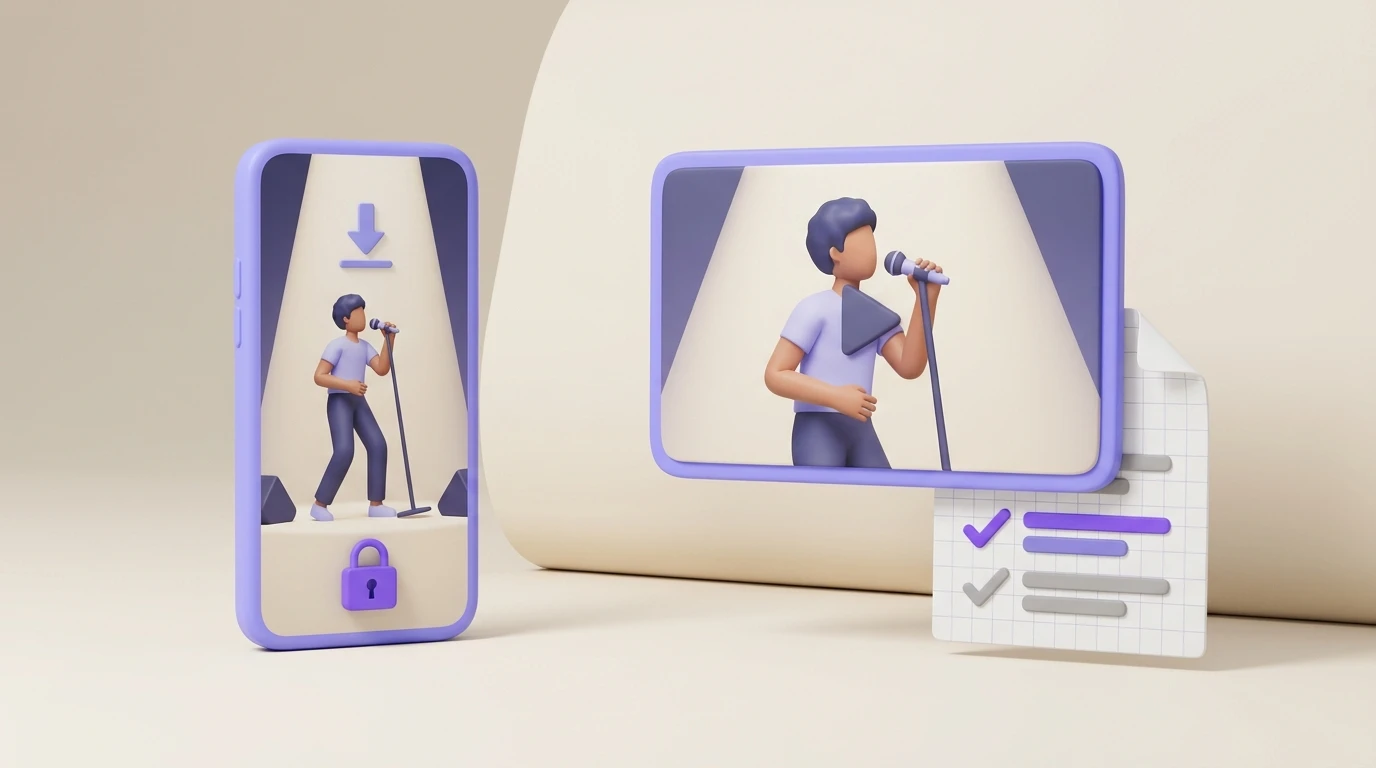
- Separate offline viewing from reuse. An app download does not give you an editable file or permission to publish someone else’s video.
- Get written permission covering the visuals and music before using a downloaded video in a release or advertisement.
- For your own release, request the original full-song master and the required social formats from your production team.
Legal Music Video Downloads: Sources and Costs
The right download source depends on what you intend to do with the video. A subscription may cover offline viewing. Publishing a downloaded file needs a license or another valid legal basis.
Access and reuse have different costs. For licensed reuse, the fee can depend on paid advertising, territory, and the length of the permission period. A free download can still carry restrictions.
| Source | What drives the cost | What to check before downloading |
|---|---|---|
| Official streaming app | Subscription requirements and regional availability | Whether the video supports offline playback and how long access remains available |
| Artist, label, or authorized seller | Download price and any separately negotiated usage rights | Whether the offer covers personal viewing or permits your planned publication |
| Your production team | Production scope and delivery agreement | Which finished masters, social adaptations, and usage rights are included |
| Licensed stock library | Asset license and intended use | Whether you are downloading footage, background music, or a completed audiovisual work |
Start with the artist’s official website or the platform’s own download feature. For a reusable file, contact the rights holder or an authorized licensing representative. A download button proves that a file is accessible. It does not establish who can license it.
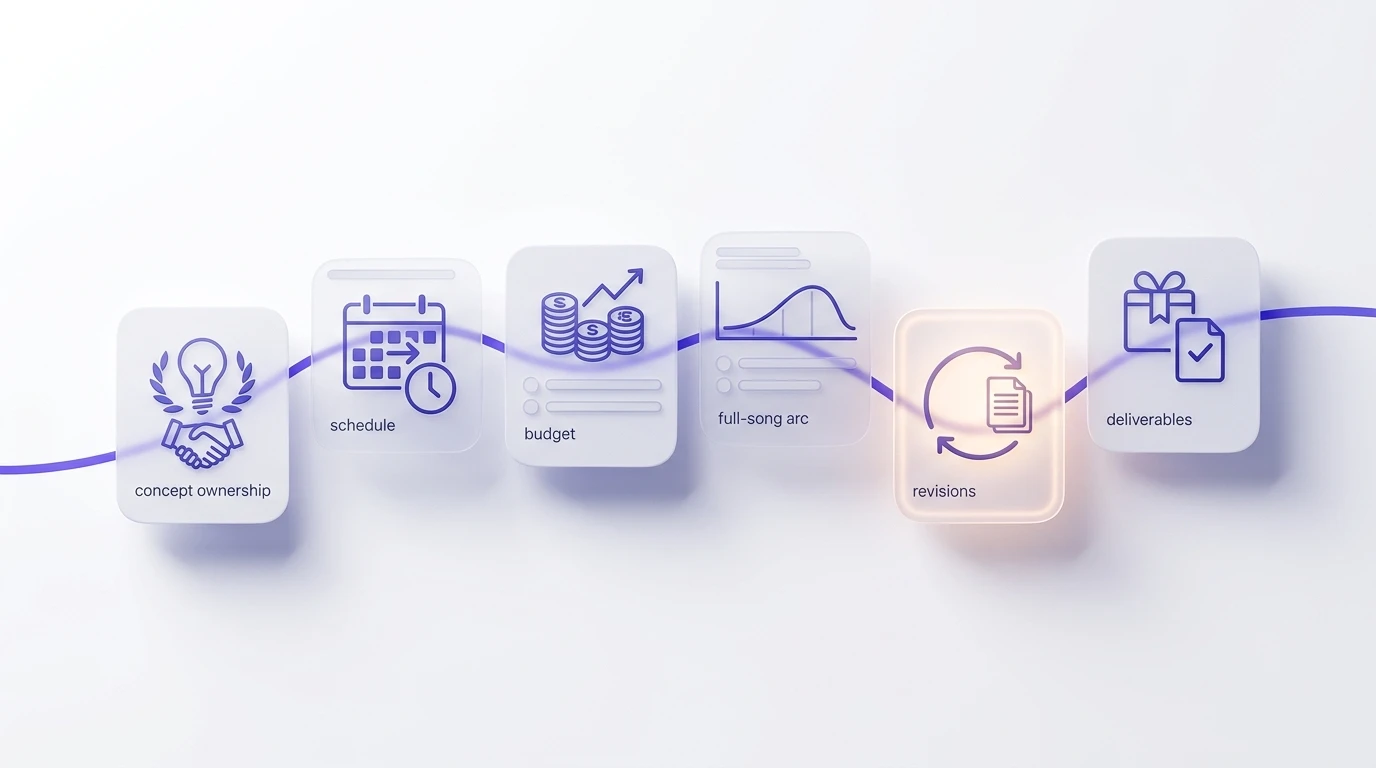
Artists commissioning new visuals should settle the handoff before paying a deposit. When choosing a video production company, ask whether the quoted fee includes downloadable final masters and permission for your release campaign. Access to editable project files is a separate question.
What usage rights must the license cover?
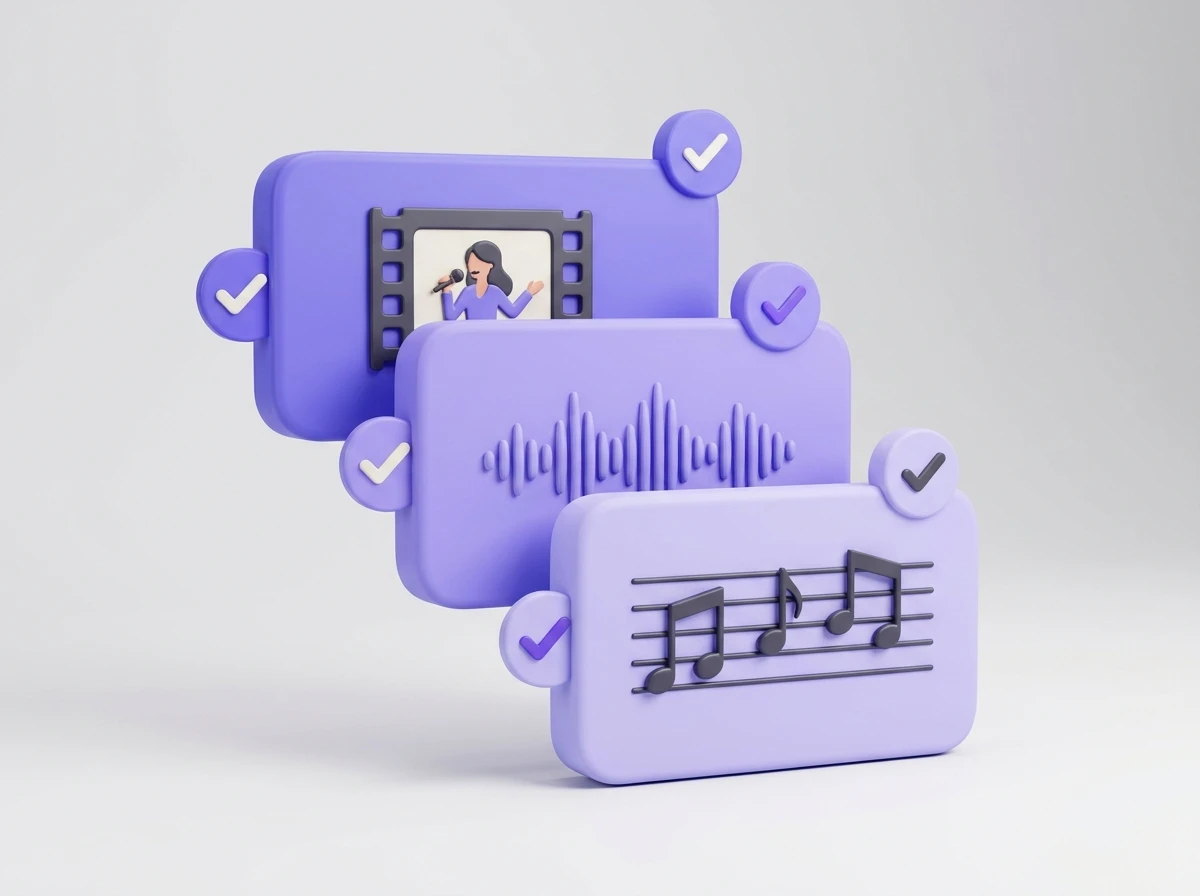
A music video combines several protected elements. Permission to use one element does not automatically clear the rest.
The U.S. Copyright Office distinguishes the musical composition from the sound recording. A completed music video adds a visual work, which may contain separately licensed footage or other material.
For example, an independent artist may own the finished recording while sharing songwriting rights with a co-writer or publisher. Receiving the video master from an editor does not resolve those music rights. Likewise, a label’s permission only covers rights it controls or can authorize.
Describe the actual use before asking for a price. “Social media use” is too broad if the campaign includes paid ads, edited versions, or posts by a label partner.
| License detail | What to specify |
|---|---|
| Intended use | Personal viewing, release upload, organic promotion, or paid advertising |
| Channels | Your artist accounts, label accounts, website, or other named destinations |
| Territory and duration | Where the content may appear and how long permission lasts |
| Editing rights | Cropping, subtitles, excerpts, or replacing audio |
| Rights clearance | Who can authorize the visuals, recording, and composition |
| Delivery | Full-song file, required ratios, credit wording, and any restrictions |
A useful distinction: ownership of a delivered copy and ownership of copyright are different things. Your agreement should state what you may do with the file and whether any rights are transferred. Do not infer either from a paid invoice.
Use this request when approaching an artist, label, or licensing contact:
Hello [rights contact],

I would like an authorized download of [video title and official URL] for [project or release].

Intended use: [describe the publication or campaign]
Accounts and platforms: [list destinations]
Paid advertising: [yes or no, with details]
Territories and usage period: [specify]
Planned edits: [cropping, excerpts, captions, or none]

Please confirm which rights you can authorize, including the visuals, sound recording, and musical composition. Identify any permissions I must obtain separately.

Please send the license terms, credit requirements, total fee, and authorized delivery method before I proceed.

Thank you,
[name and organization]
How to download and verify the right file
A safe download starts with a verified source and ends with a file that matches the agreed use. We recommend keeping the permission record beside the delivered media, so anyone handling the release can check the terms.
-
Verify the source. Open the official platform or follow a delivery link supplied by the artist, label, or production team. Confirm unexpected delivery emails through an existing contact channel before opening attachments.
-
Confirm the terms before payment. For offline viewing, check the platform’s download conditions. For publication, obtain the written license or production agreement and resolve any missing music or visual permissions.
-
Use the authorized download control. On supported YouTube videos with eligible Premium access, select the platform’s Download option. For a reusable master, use the file link supplied by the authorized source rather than a stream-conversion service.
-
Check where the download lives. An offline app download remains inside that service. An authorized production file should save to your chosen storage location, where you can back it up with its license and delivery notes.
-
Play the delivered file before uploading. Check the complete song and its ending. Inspect picture quality, audio sync, and any captions, then compare the framing with the version approved for that destination.
For a release approaching its deadline, a common delivery problem is receiving a preview or teaser instead of the full-song master. Put the required versions in writing before the final handoff.
A commissioned video’s path from treatment to final master should end with a clear delivery list. Name the primary master separately from the social adaptation, since a vertical crop can lose a face or cut off essential text.
Avoid download pages that require an unrelated installer or browser extension. Repeated download buttons and requests to disable security tools are reasons to stop. A converter’s promise of a free file tells you nothing about its authorization.
Free music and stock footage are different assets
Free background music and stock footage can help build a video. Neither category automatically supplies a finished music video for a particular song.
YouTube’s Audio Library provides music and sound effects for creators, with attribution requirements that depend on the track’s license. It is an audio resource, not a catalog of completed artist videos.
A stock clip of a drummer may supply useful imagery without including a cleared song. Read the asset’s license for your intended publication and check any restrictions involving recognizable people or logos.
Royalty-free does not mean unrestricted. It describes a licensing arrangement, not a waiver of copyright. Follow the applicable license even when the download costs nothing.
For an artist releasing a finished single, keep the assets separate during review: your approved recording and the licensed visuals. That makes it easier to spot an accidental library soundtrack or footage whose terms do not fit the campaign.
Frequently Asked Questions
Can I convert a downloaded music video to MP3?
An MP3 contains audio only, so conversion removes the video. Whether you may extract and use that audio depends on your rights, the source’s terms, and applicable law. Download access alone does not grant permission to redistribute the recording.
Can I use a short music video clip without permission?
There is no universal clip length that makes reuse lawful. The U.S. Copyright Office explains that fair use requires a case-specific assessment, including the purpose of the use and its effect on the market. Do not build a commercial release plan around an assumed safe duration.
Why does a downloaded music video look worse than the original?
The supplied file may have lower resolution or heavier compression than the production master. Request a better source from the rights holder or production team when your agreement allows it. Enlarging a compressed file cannot restore detail that was discarded.
If your finished single still lacks visuals, put the release date and required formats into a production brief. SongTrailer combines human direction with AI-assisted visuals to deliver a full-song master and a social-ratio adaptation for $3,500, in about 5–7 business days after intake and direction lock. Get in touch about your release with that brief and the usage rights you need confirmed.