Eighties music videos built visual worlds through a strong central image, consistent design, and editing that followed the song. MTV launched in 1981, as Britannica’s history of the channel records. From a-ha’s comic-book romance to Janet Jackson’s industrial dance setting, these examples show which choices made those worlds convincing.
- Study “Take On Me” for a clear visual rule: the story changes whenever its characters cross between the drawn world and reality.
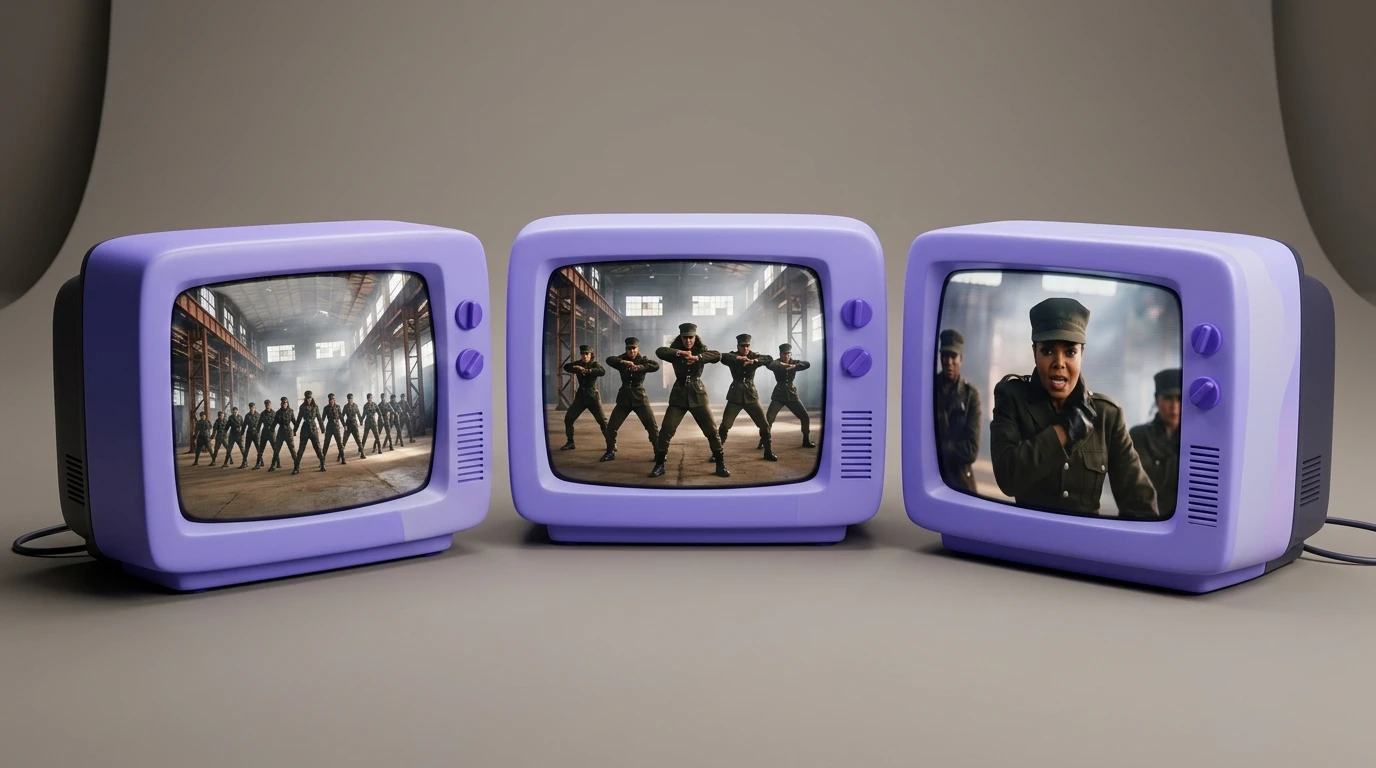
- Watch “Rhythm Nation” for continuity through costume and choreography. A coherent setting can carry a video without constant location changes.
- Before planning individual shots, write down what stays consistent throughout your song and what changes when the chorus arrives.
Start with these eighties music videos
For a useful introduction to the best eighties music videos, I would start with the examples below. Each solves a different creative problem, from making a performance feel distinctive to holding together a story across changing visual styles.
| Video | What builds its world | What to watch closely |
|---|---|---|
| a-ha, “Take On Me” | A romance moves between live action and a pencil-drawn comic. | The transitions have consequences for the characters, so the effect becomes part of the story. |
| Michael Jackson, “Thriller” | Horror-film staging gives way to a tightly choreographed group performance. | The extended opening establishes danger before the main dance sequence takes over. |
| Peter Gabriel, “Sledgehammer” | Stop-motion objects and frame-by-frame changes transform the space around Gabriel. | His face remains a visual anchor while almost everything surrounding it changes. |
| Eurythmics, “Sweet Dreams (Are Made of This)” | Annie Lennox’s sharply defined appearance holds together strange boardroom imagery. | The controlled compositions make the surreal details feel deliberate. |
| Janet Jackson, “Rhythm Nation” | A monochrome industrial setting becomes a disciplined performance space. | Matching costumes and coordinated movement make the dancers read as a single force. |
| Van Halen, “Jump” | A stripped-back performance setting puts the band’s physical character in control. | Expressions and movement create variety without a complicated fictional setting. |
These are different production models, not interchangeable style references. “Jump” depends on the performers. “Take On Me” depends on a boundary between worlds. Borrowing the lighting from either video without understanding that underlying structure gives you a look with little to sustain it.
“Thriller” also needs a viewing distinction. The Library of Congress’s National Film Registry listing includes the film, whose extended dramatic passages make the complete version essential viewing. A short excerpt shows the choreography but loses the setup that gives it force.
What makes a visual world hold together?
A visual world holds together when viewers can recognise its rules, even as individual shots change. The strongest 1980s music videos establish something stable, then introduce variation around it.
Music promos existed before MTV, as the examples in our historical guide to 1970 music videos show. The useful question for this decade is how a recognisable screen identity could hold attention across a whole song.
In “Rhythm Nation,” the industrial setting and uniform-like clothing establish discipline before the choreography makes it physical. A cut to another angle still belongs to the same world because the movement follows the same logic. The performers carry continuity through the edit.
“Sweet Dreams” works differently. The scenes are strange, but Lennox’s appearance and the formal framing give the viewer something dependable. Surreal imagery still needs a stable reference point. Without one, a sequence of unusual pictures can feel disconnected from both the artist and the track.
“Jump” offers a useful correction to expensive reference boards. Its identity comes largely from how the band occupies the frame. For an artist facing a release deadline or a limited shoot budget, that is a practical model: choose a setting that supports a distinctive performance, then give the performer room to make it memorable.
Editing supplies the changes in intensity. Cutting on every beat can flatten a song because the verse and chorus receive the same treatment. A stronger approach lets a held shot create anticipation, then changes the movement or framing when the music opens up.
How did animation make impossible worlds believable?
Animation gave directors control over transformations that a physical set could not easily deliver. The convincing examples attached those transformations to a clear relationship between the performer and the surrounding world.
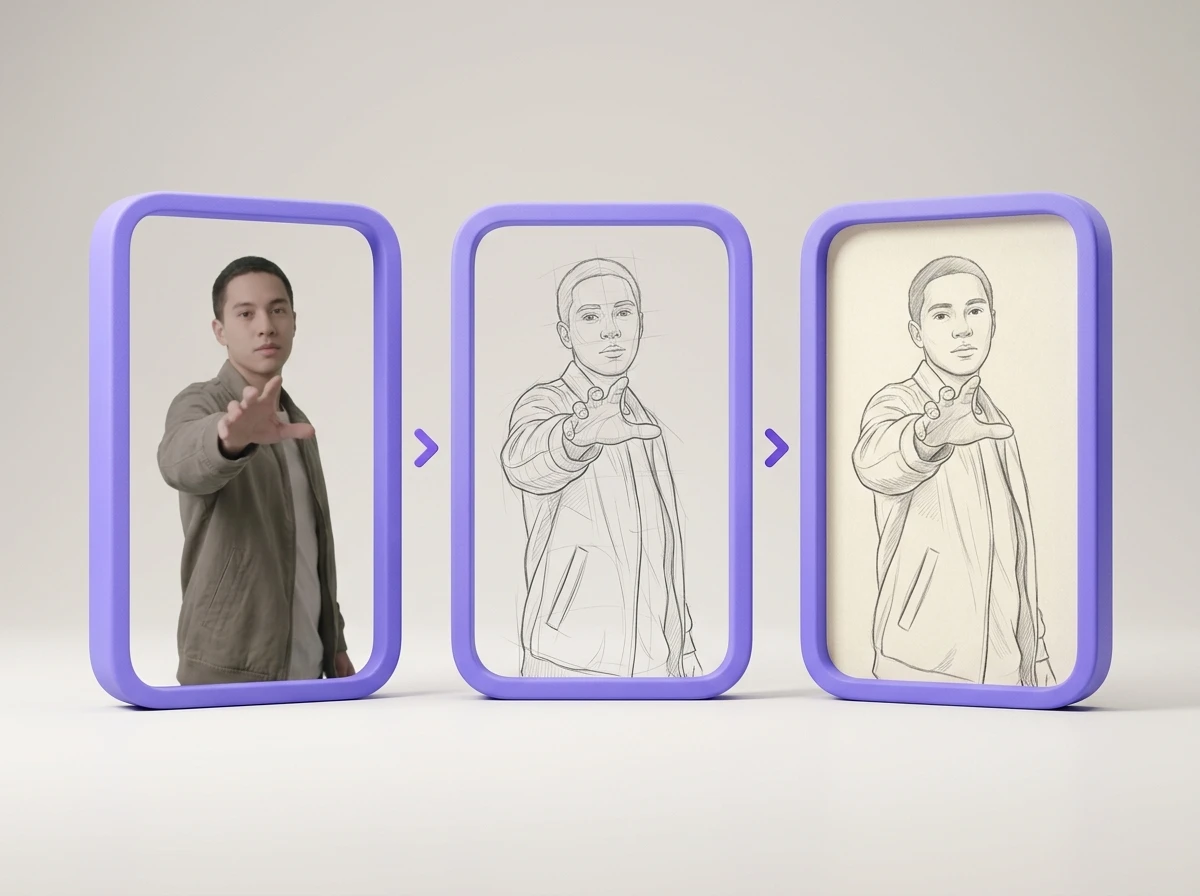
“Take On Me” uses rotoscoping, a process in which live-action movement is traced into animation. Its pencil-drawn characters retain recognisable human gestures, which helps the romance survive the change in medium. More importantly, crossing between the comic and reality changes what the characters can do and what threatens them.
That boundary gives the audience a rule to follow. The drawing technique provides the texture; the story gives viewers a reason to care when the texture changes.
Peter Gabriel’s official “Sledgehammer” video shows another approach: objects animate around him, while his own body participates in frame-by-frame movement. That treatment of a human performer is often called pixilation. Gabriel remains recognisable as the surroundings transform, allowing the video to become increasingly strange without losing its centre.
These techniques should not be mistaken for effortless shortcuts. Frame-by-frame work requires careful control, and live-action footage needs the right movement before tracing can make it useful. The transferable lesson is the visual relationship: decide what remains stable while the impossible thing happens.
The same principle matters with AI-assisted visuals. If a character’s clothing or the room’s architecture changes without a story reason, the viewer has to rebuild their understanding of the scene. Fix those continuity errors before adding more elaborate transformations.
Turn the references into a usable video brief
A usable reference brief describes how the video behaves across the finished song. “Make it look eighties” leaves too many decisions unresolved, especially when the track is ready and the release date is approaching.
At SongTrailer, one creative director owns concept and pacing through delivery for human-directed, AI-assisted full-song videos. A brief should support that continuous direction; our guide to music videography from treatment to final master explains how those decisions move into production.
Use this sequence before collecting more references:
- Map the finished track. Mark its section changes and identify where the emotional pressure rises or releases. Use the actual master, since a changed arrangement can undo an edit plan.
- Write the governing visual rule. Define the relationship that makes this world distinctive. For example: the performer remains physically still while the room reacts to the vocal.
- Assign changes to song sections. Decide how that rule behaves during the verse, then how the chorus develops it. Give the ending a consequence rather than another unrelated scene.
- Test framing before production. Sketch how the essential action fits the primary master and the intended social-ratio adaptation. If the idea relies on opposite edges of a wide frame, a vertical version may need a different composition.
Consider a hypothetical synth-pop single about isolation. Its world is an empty late-night office. During the verse, the performer stays behind a desk; at the chorus, the office lights respond to the vocal while the camera moves closer.
The bridge lets the performer leave the desk for the first time. That small action now carries weight because the earlier sections established restraint. The final chorus can intensify the existing lighting behaviour instead of introducing a new location that the production has to explain and maintain.
This borrows the controlled strangeness of “Sweet Dreams” without copying its specific imagery. It also gives the editor a plan for the full track, reducing the risk of a compelling opening followed by repetitive coverage.
Borrow a reference’s working principle before borrowing its surface. Pencil texture, monochrome styling, or coloured light becomes useful when it serves an idea the song can sustain.
Frequently Asked Questions
What are the best 80s music videos to start with? “Take On Me,” “Thriller,” and “Sledgehammer” are strong starting points for narrative and effects. Add “Rhythm Nation” for choreography and “Jump” for a performance-led approach with a simpler setting.
Where can I watch eighties music videos online for free? Look for official artist, label, or VEVO channels on YouTube, where many videos are available with advertising. Availability varies by region, and some uploads are shortened versions, so check the title and description before treating one as the complete film.
Were eighties music videos shot on film or videotape? Both were used, sometimes within the same production alongside animation or other effects. An online upload’s appearance also depends on its transfer and compression, so softness alone does not establish the original shooting format.
Can I use footage from an old music video in my own release? Age alone does not make music-video footage free to reuse. Permission may be needed from the relevant rights holders, so treat a reference as creative inspiration and check any proposed reuse with a qualified rights adviser.
Choose a reference whose visual rules fit your song, then write a brief that works beyond its opening shot. If your finished single needs that full-song direction, get in touch with SongTrailer with the track and the specific choices you want your references to inform.