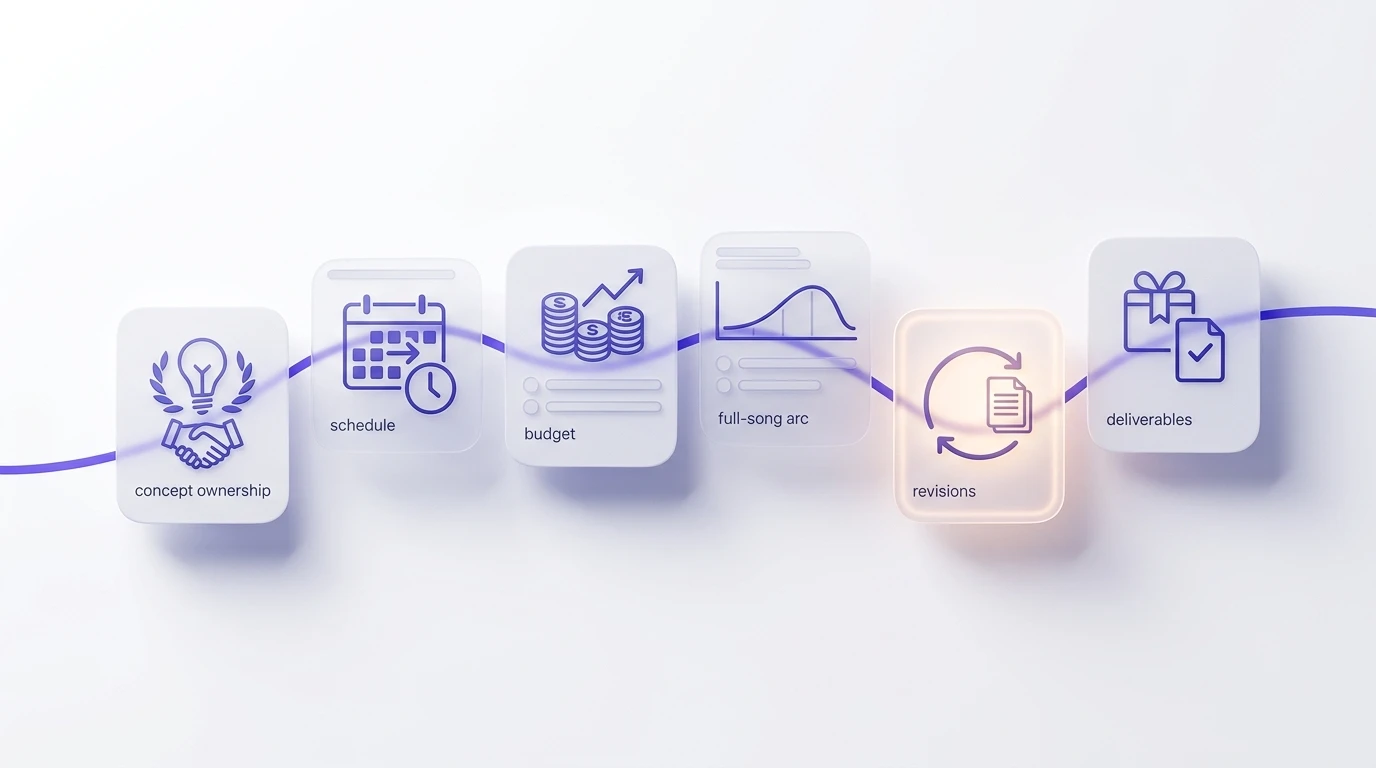

Choosing chicago video production for a finished single starts with the footage your release needs: a local crew for real locations, a studio for controlled performance, or remote direction for constructed visuals. Compare total cost, schedule, permits, rights, and delivered files before booking. SongTrailer’s full-song package is $3,500 flat, with a social-ratio adaptation included.
- Choose the production model around the footage. Real Chicago locations need a shoot; a constructed visual world may not.
- Compare finished deliverables, not shoot-day prices. Ask whether editing, color, social formats, usage rights, and revisions are included.
- Protect the release date in writing. Confirm when the treatment locks, what starts the delivery clock, and who approves the final master.
What matters when choosing Chicago video production?

Start with a short creative brief: the finished track, release date, visual references, required platforms, and whether the artist must appear on camera. Then ask each provider for a director treatment: a concrete proposal for the visual world, scene progression, and pacing across the song. A striking frame means little if the second verse has no plan.
Price the finished video. A location quote may leave out permits, insurance, travel between setups, editing, color grading, and a vertical adaptation. A studio quote may exclude stage rental, lighting, set dressing, or overtime. When you compare video production company proposals, require each one to name the primary master, social-ratio files, revision rounds, and any charges triggered by changes.
For a Chicago shoot, identify who secures location access and checks permit requirements before you commit to a date. The Chicago Film Office is the city resource for filming coordination; private locations and other property managers may have separate rules. Ask for proof of production insurance where the location or permit requires it. A crew’s availability does not guarantee a usable location.
How do local crews, studios, and remote production models compare?
The scores below measure budget and scheduling friction, not artistic quality. “Strong” means fewer variables to resolve; “Conditional” means the quote, contract, or booking decides. SongTrailer’s stated remote package is $3,500 flat for a full-song master and social-ratio adaptation, delivered in about 5 to 7 business days after intake and direction lock.
| Buyer criterion | Local location crew | Chicago studio shoot | Remote AI-assisted direction |
|---|---|---|---|
| Total cost | Conditional: itemize crew, gear, locations, permits, and post | Conditional: itemize rental, crew, set, and post | Strong: SongTrailer’s stated package is $3,500 flat for its specified deliverables |
| Turnaround | Conditional: access, weather, shoot, and edit schedules | Conditional: stage booking, shoot, and edit schedules | Strong: SongTrailer states about 5 to 7 business days after intake and direction lock |
| Creative ownership | Conditional: approve the treatment and contract rights | Conditional: approve the treatment and contract rights | Conditional: approve direction and clarify rights in AI-assisted assets |
| Production insurance | Conditional: verify required coverage and certificate | Conditional: check crew and facility requirements | Not applicable to on-set coverage if there is no filming |
| Crew size | Conditional: depends on locations and setups | Conditional: depends on performance and set needs | Strong: no on-site crew for wholly digital visuals |
| Location requirements | Conditional: access and any required permits | Conditional: rental slot and facility rules | Strong: no physical location for wholly digital visuals |
| Refinement rounds | Conditional: specify rounds and extra edit fees | Conditional: specify rounds and extra edit fees | Conditional: confirm included rounds and change fees |
Possession of an exported file is separate from ownership of the underlying footage, artwork, or other assets. Ask every provider what you may publish, whether third-party material is licensed for the intended use, and whether you receive project files as well as final exports. Put those answers in the agreement before production starts.
Which option fits performance, narrative, or full-song visuals?
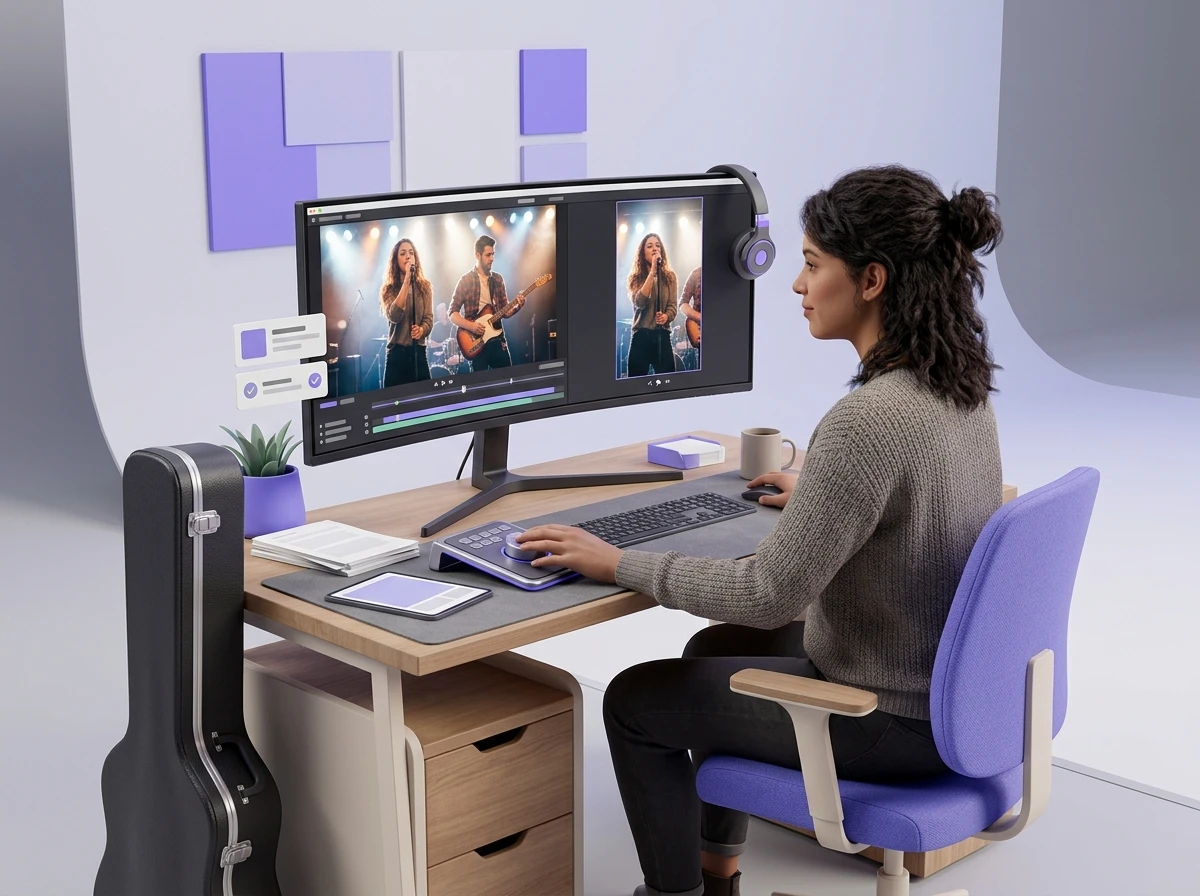
Choose a local crew when the place must be real. If the treatment depends on the artist walking through a specific Chicago location, interacting with a crowd, or performing outdoors, capture those elements on location. Build time for access, weather alternatives, playback for lip-sync, and enough coverage to cut through the entire track.
Choose a video production studio when the performance matters more than the address. Controlled light, repeatable camera moves, and a set you can reset make a studio useful for a band performance or stylized solo portrait. It still needs a shot plan. Without changes in framing and energy, a full-song edit can feel like an extended teaser.
Choose remote direction when the visual world can be built without filming. It suits finished tracks that need continuous mood, deliberate pacing, and visual continuity across the full song, especially when a shoot cannot fit the release schedule. The process from music videography treatment to final master matters here: each section needs a visual purpose, and the human edit must carry the song through its transitions.
Specify a primary master for the main release platform and a separately checked social-ratio adaptation. A quick vertical crop can remove the performer, a key action, or on-screen text. Confirm export requirements against the destination platform; YouTube’s recommended upload encoding settings are a useful check for a YouTube master.
When should you avoid each production model?
Skip a location shoot if no location appears in the treatment and the quote consumes the time reserved for editing. Real streets add texture. They also add permissions, weather exposure, and moving parts that may do nothing for the song.
Skip a studio when the concept depends on recognizable Chicago spaces or unscripted interaction outside a set. Ask what the rental includes before comparing its price with a crew quote; an empty stage is not a finished production.
Avoid a wholly remote visual workflow when the release promises a verifiable live performance, a specific real-world place, or exact likeness continuity that the proposed method cannot reliably deliver. If AI-assisted visuals are under consideration, review how human direction shapes an AI music video for artists and ask for the rights position on source material and final assets. The U.S. Copyright Office’s guidance on copyright and artificial intelligence is relevant when assessing claims about AI-generated material. Get the treatment, approvals, refinement rounds, and usage terms settled before direction lock.
Frequently Asked Questions
How much does video production typically cost for a music release?
There is no useful single figure across location shoots, studio productions, and remote visuals. Request an itemized quote that includes production, post-production, color, format adaptations, rights, and revision rounds so you can compare the finished deliverables.
Are there film studios in Chicago for music videos?
Yes, Chicago has rentable studio and soundstage options. Before booking, confirm the space’s lighting and power, playback setup, load-in rules, insurance requirements, and whether crew and editing are separate costs.
The right choice is the one that can deliver the full song you intend to release, in the formats you need, on a schedule you can approve. If remote direction fits your track and deadline, get in touch with SongTrailer with your finished song, release date, and visual brief.