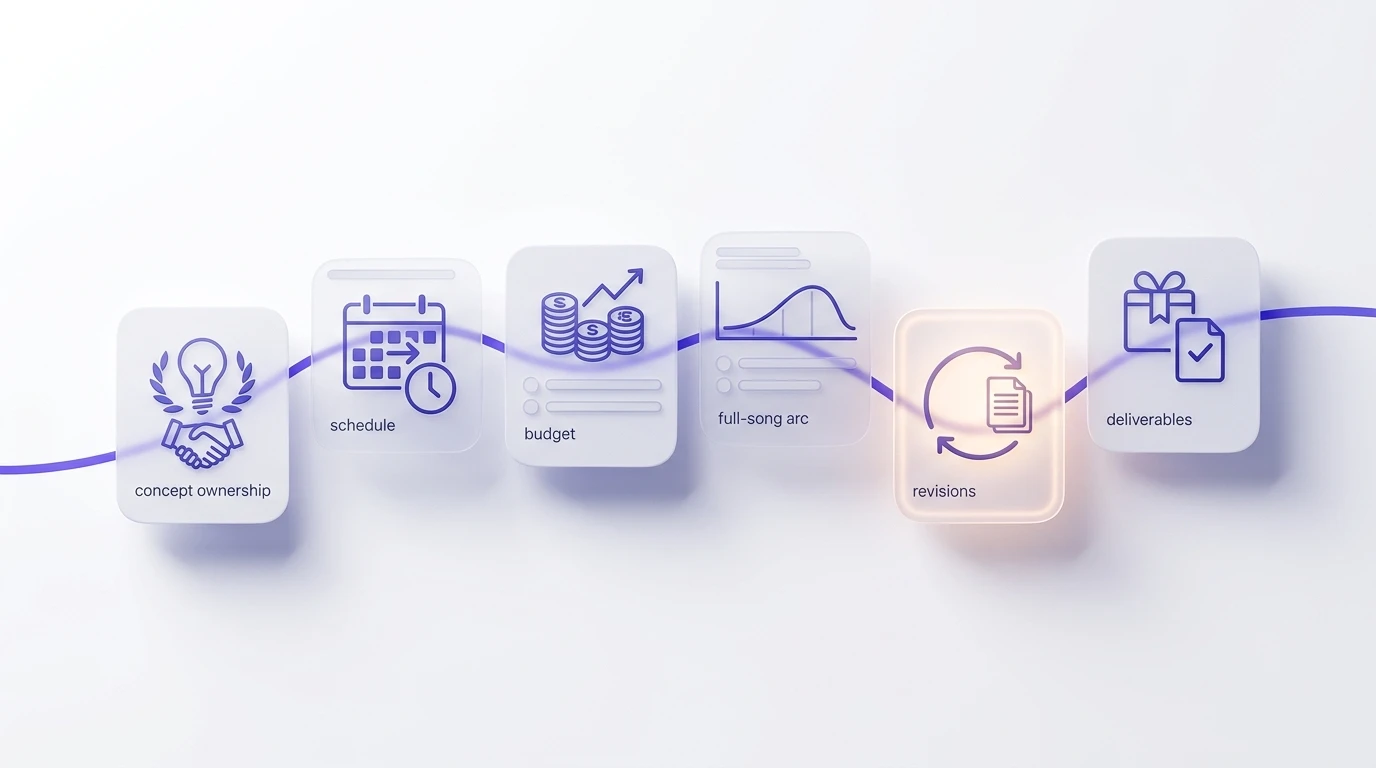
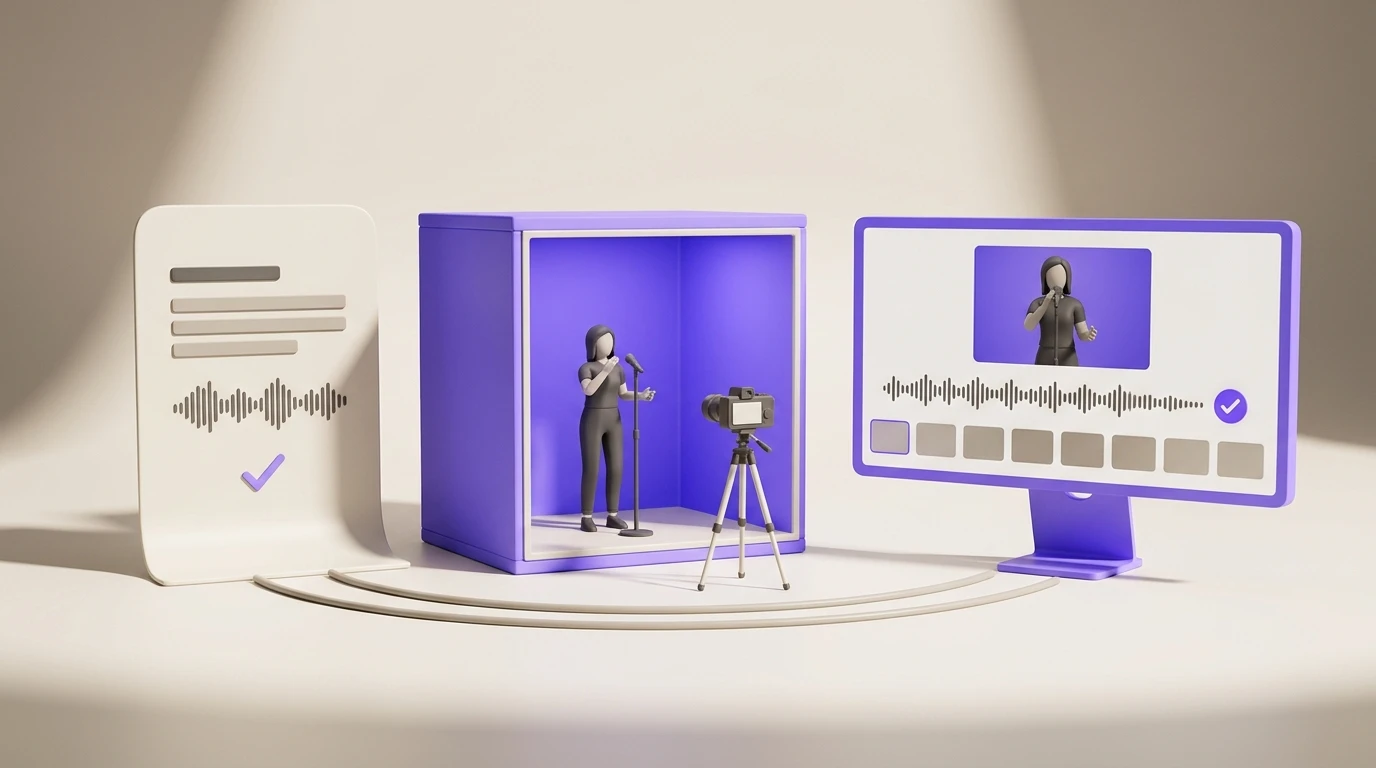
Boston video production for a finished single should move from a clear artist brief to an approved treatment, then through production and editing to a release-ready master. Set delivery formats early: YouTube specifies 16:9 as its standard desktop aspect ratio. The practical decisions are what to film locally, how to quote it, and what to approve before release.
- Give every producer the same brief and delivery deadline so quotes cover the same work.
- Require a full-song edit, including the intro and ending, before requesting promotional cutdowns.
- Treat a vertical adaptation as a separate framing task. Confirm its duration and review it before delivery.
Write an Artist Brief That Can Be Quoted
An artist brief defines what the video must achieve and what the production must deliver. It gives a producer enough detail to propose an approach without guessing at your expectations.
Start with the approved audio master. Changing the song after editing begins can disturb every cut, performance sync, and visual transition. If the mix is still moving, say so before anyone commits to a delivery date.
Describe what the audience should see. “Cinematic” gives a director little to work with. “An intimate rehearsal-room performance that becomes more spacious during the chorus” gives them a visual progression.
Say an artist has a $5,000 spending cap and a November 20 release. This is a usable brief for that scenario:
Project: Music video for a finished single
Audio: Approved full-song master attached
Creative goal: Intimate performance with a late-night atmosphere
Must show: The artist performing in a rehearsal room
Must avoid: Altered facial likeness and unrelated city landmarks
Coverage: Entire song, including intro and ending
Deliverables: Landscape master and vertical adaptation
Budget ceiling: $5,000 total
Release date: November 20
Final files due: November 13
Approver: Artist, with label feedback consolidated
The brief separates creative ambition from delivery obligations. A producer can now explain whether the budget supports the proposed shoot and exactly what the vertical adaptation includes.
Use this version for your own release:
Project:
Approved audio file and exact runtime:
Creative goal:
Required artist appearance or locations:
Visual references and what you like about each:
Elements to avoid:
Full-song coverage requirements:
Delivery formats and duration of each version:
Total budget ceiling:
Release date:
Final files deadline:
Person responsible for consolidated approval:
Attach references with a reason. “Use the restrained camera movement” is useful direction. Asking someone to reproduce another artist’s entire video creates a weaker creative starting point.
Lock the Treatment and Production Plan
A treatment translates the brief into a proposed film. It should explain the visual world and how that world changes as the song develops.
For the rehearsal-room example, the treatment might begin close to the artist and reveal more of the room when the chorus opens. The bridge could shift the lighting before the final section returns to the original look. That is a repeatable visual system, rather than a collection of attractive shots.
Choose the production method around what must appear on screen.
| Approach | Best fit | What to settle before approval |
|---|---|---|
| Local live-action shoot | Recognizable artist performance or a specific Boston location | Location access, crew scope, and performance coverage |
| AI-assisted visuals | A stylized world that does not require filming a real place | Visual consistency, likeness expectations, and acceptable artifacts |
| Hybrid production | Filmed performance combined with constructed environments or inserts | How footage and generated imagery will share a coherent look |
Use a Boston video crew when physical presence matters. An actual performance in a particular room calls for cameras there. A dreamlike city sequence may not, especially when recognizable local landmarks are unnecessary.
For public-location filming, check Boston’s film permit application process before locking the location. Have the producer confirm which permissions and insurance requirements apply to the actual shoot plan.
Approve the riskiest visual before committing to the full sequence. For AI-assisted work, that could be a representative moving shot showing the proposed character and environment. A still frame cannot demonstrate whether a face stays consistent during movement.
A defined music videography workflow from treatment to final master makes approval points explicit. Put those approvals in writing so a later request for a different visual world is recognized as a scope change.
Edit the Full Song Before Building Social Versions
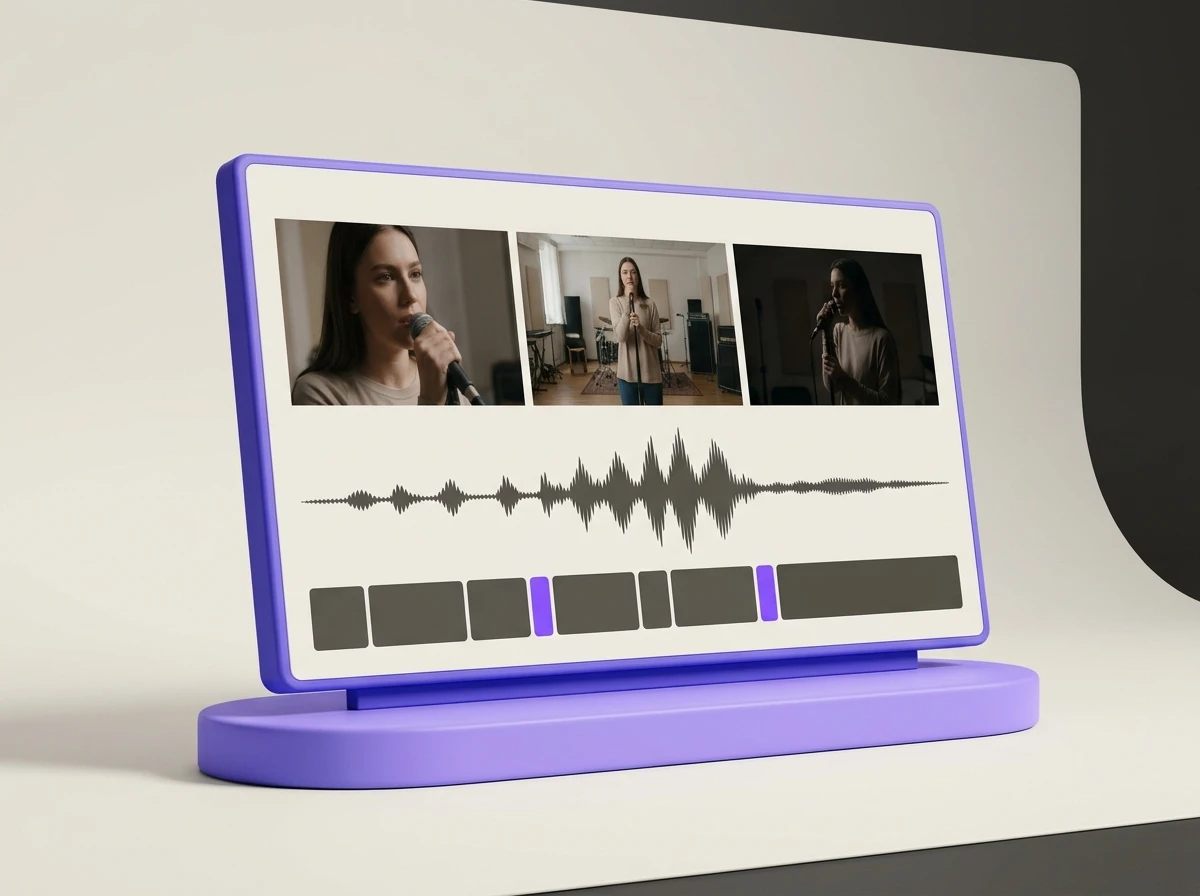
A full-song music video needs progression across the entire track. A strong opening cannot carry a film whose middle repeats the same image without development.
Map the song before assembling the edit. Mark changes in energy, then decide which ones deserve a visual response. Cutting on every beat can flatten the song because every moment receives the same emphasis.
For the rehearsal-room film, the first verse can establish the artist through restrained framing. The chorus earns wider coverage. During the bridge, hold a shot longer or change the lighting so the final return has somewhere to go.
Continuity deserves its own review. Check whether wardrobe and lighting remain intentional across adjacent shots. In generated sequences, also watch for changing facial features or objects that transform between cuts.
Request a full-song rough cut before spending refinement rounds on a short teaser. Watch it once without pausing to judge pacing. Then review specific frames for defects.
Make feedback executable. “The second chorus feels weak” identifies a reaction but leaves the solution open. “Hold the wide performance shot through the first chorus line, then return to the close-up” gives the editor a decision they can apply.
Consolidate label and artist feedback into one set of notes. Conflicting approvals consume time and can undo edits that someone has already accepted.
Approve the Final Master and Social Adaptation
The final master is the approved delivery file for the complete video. A social-ratio adaptation reframes the work for a different screen shape, while a cutdown changes its duration.
Those are separate decisions. Ask whether the social deliverable contains the full song or a shorter selection. The word “social” does not answer that question.
| Deliverable | What to confirm | What to inspect |
|---|---|---|
| Full-song master | Approved runtime, frame shape, resolution, and file format | Complete opening and ending, clean playback, correct audio |
| Social-ratio adaptation | Frame shape and duration | Face placement, cropped gestures, readable titles |
| Promotional cutdown, if commissioned | Selected song section and intended platform | Clear entry point, intentional ending, correct release information |
A centered crop can remove the microphone or cut off the gesture that makes a performance shot work. Review the adapted framing shot by shot. If titles matter, test them within the intended platform’s preview before approval.
Check the exported file itself. A clean editing timeline does not prove that the delivered file contains the right audio or plays through the ending correctly.
Keep the approved audio, final exports, and written approval together. Confirm separately whether project files or intermediate assets are included, rather than assuming they arrive with the finished video.
Compare Boston Video Production Quotes and Schedules
Compare quotes against the same approved scope. A shoot-only estimate and a finished-video package cover different obligations, even when their headline prices look similar.
Ask each video production firm to identify what is included through final delivery. Look closely at location costs, post-production work, and refinement rounds. Confirm who pays for additional exports or changes requested after approval.
When choosing a video production company, request a complete music video in a comparable style. Watch through the quieter sections. A showreel demonstrates selected moments, while a full-length film reveals pacing and continuity.
There is no useful universal price for music video production. A controlled performance shoot and a narrative involving several locations place different demands on the budget. Require a defined total or a written mechanism for approving additional costs before they occur.
Build the schedule backward from the final-files deadline, rather than treating release day as the delivery date. Leave room to test uploads and resolve technical problems.
Ask what starts the production clock. A quoted turnaround may depend on receiving approved audio and locking the treatment. Also confirm how delayed feedback affects delivery, especially when several people must approve the edit.
Frequently Asked Questions
What is the difference between videography and video production?
Videography usually refers to capturing footage, often with a relatively compact crew. Video production covers the broader process, including planning and post-production, although individual providers may use the terms differently.
How should I evaluate Boston video production reviews?
Look for comments about delivery reliability and how the team handled feedback. Give more weight to reviews describing a comparable project, then ask the provider how the same approval process would work for your release.
Does paying for a music video mean I own its copyright?
Payment alone does not establish every ownership right, so the contract should state what rights transfer and which elements remain licensed. For AI-assisted work, the U.S. Copyright Office’s AI guidance and reports distinguish human-authored expression from purely AI-generated material. Ownership of delivered files and copyright protection are separate questions.
Send the same rehearsal-room brief to each shortlisted team and compare the scope before the headline price. For a full-song AI-assisted route, get in touch with SongTrailer: one creative director owns direction through final edit, with a $3,500 flat package covering the full-song master and social-ratio adaptation in about 5-7 business days after intake and direction lock.