
The term ai filmmaking describes a production model in which generative tools create or transform shots while a human director controls concept, continuity, pacing, and final delivery. For a full-song music video, success depends on planning the visual system before generation, editing to the finished track, and mastering each required platform ratio.
- Lock the visual direction before generating finished shots. A defined palette, character design, lens language, and movement style reduce expensive visual drift.
- Build the edit against the final mastered track. Song structure should control shot length, transitions, intensity, and narrative progression.
- Treat generative output as source footage. Human editing, compositing, color work, and quality control turn individual clips into a coherent film.
- Confirm tool terms, likeness permissions, music rights, refinement scope, and delivery formats before production begins.
What is ai filmmaking, and where does human direction fit?
AI filmmaking combines generative image or video systems with conventional directing and post-production. Text-to-video creates clips from written prompts. Image-to-video animates designed still frames. Video-to-video transforms existing footage while retaining some motion or composition.
These systems produce shots. They do not reliably make the thousands of connected decisions required by a full song.
A creative director still defines the central visual idea, decides what belongs in the world, rejects weak generations, and controls the relationship between image and sound. The editor then shapes performance, movement, transitions, and emotional pressure across the complete track.
That distinction matters because a striking five-second clip can hide structural problems. A finished song exposes them. Characters change faces. Wardrobes mutate. Locations lose their architecture. Camera language shifts from cinematic to synthetic without intent.
The director prevents that drift by creating a repeatable visual grammar. That grammar may specify restrained camera movement, shallow focus, soft halation, a limited color palette, and recurring environmental details. Every shot gets judged against the same system.
AI-assisted production works best when the track is finished and the release team can make firm creative decisions. If lyrics, mix, duration, or campaign positioning remain unstable, the visual edit will keep moving too.
How ai filmmaking moves from brief to final master
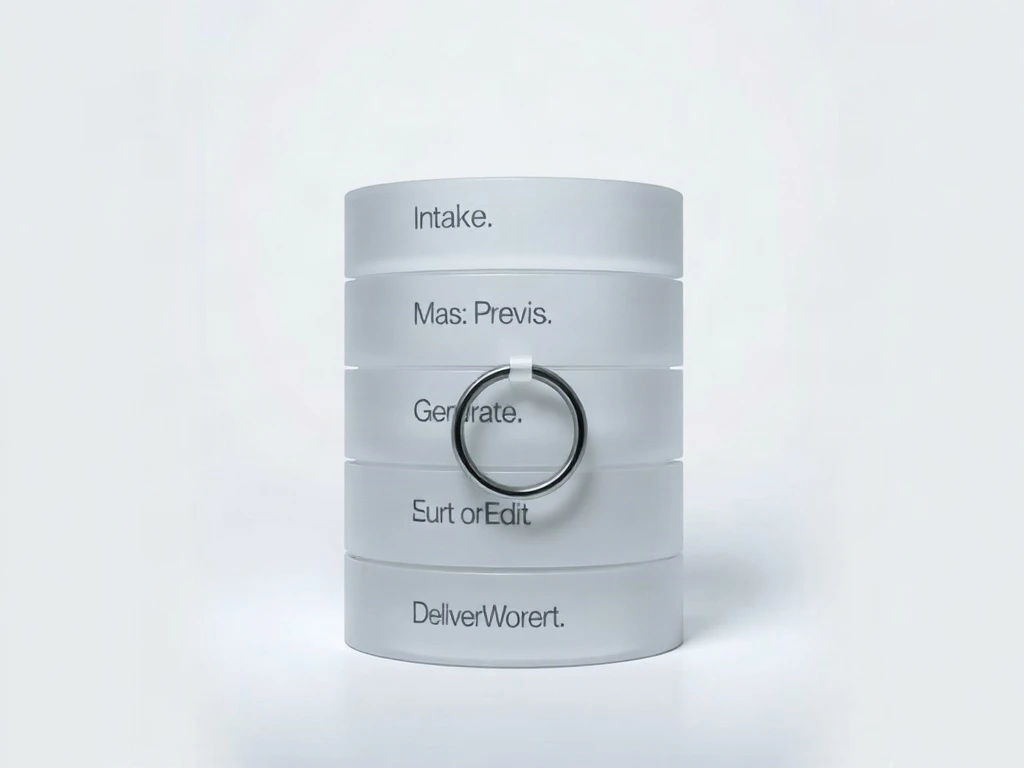
An AI-assisted music video should follow a controlled production path. Prompting begins only after the track, creative target, and delivery scope are clear.
| Stage | Work completed | Decision that must be locked |
|---|---|---|
| Intake | Final audio, lyrics, release date, references, artist assets, required formats | Which track version is the master |
| Audio map | Verses, choruses, instrumental passages, accents, emotional turns | Where visual energy should rise or release |
| Direction | Treatment, palette, visual rules, character design, shot language | The world the film will maintain |
| Previsualization | Storyboards, style frames, motion tests, continuity tests | Whether the concept can survive a full song |
| Generation | Text-to-video, image-to-video, transformations, alternate takes | Which outputs belong in the film |
| Edit and post | Assembly, pacing, compositing, cleanup, color, typography | Whether every shot supports the track |
| Delivery | Primary master, social adaptation, file checks, final export | Which approved versions are release-ready |
The treatment should explain more than mood. It needs to show how the idea develops. A dreamlike desert can look excellent in a reference frame, yet the treatment still has to explain what changes between the opening verse, first chorus, bridge, and final refrain.
Storyboards solve composition. Style frames solve appearance. Motion tests expose whether the intended characters, fabrics, particles, and camera moves remain stable once animated. Those tests should happen before a team generates dozens of polished clips.
A practical music videography workflow from treatment to final master also defines feedback points. Direction feedback belongs early. Shot substitutions belong during assembly. Tiny finish notes belong near final delivery. Mixing those stages creates avoidable rework.
Which visual approaches work across a full song?
The strongest full-song concepts use a visual system that can produce variation without losing identity. A concept needs enough range for several minutes while retaining recognizable people, environments, and design rules.
| Approach | Best use | Continuity risk | Direction requirement |
|---|---|---|---|
| Symbolic visual collage | Abstract, atmospheric, or lyrically suggestive tracks | Low to moderate | Repeat motifs, palette, texture, and motion behavior |
| Recurring cinematic world | Songs that need immersion without a literal plot | Moderate | Define geography, lighting logic, props, and camera style |
| Stylized character study | Artist-led visuals without a conventional shoot | Moderate to high | Lock face, wardrobe, silhouette, and performance behavior |
| Linear narrative | Songs with a clear dramatic arc | High | Plan cause, location, eyelines, character state, and transitions |
| Hybrid live action and AI | Releases with usable artist footage or controlled plates | Moderate | Match grain, lighting, motion blur, and perspective |
Image-to-video is often the stronger choice when character consistency matters. The team can approve a designed frame first, then animate it. Text-to-video offers faster exploration, but it gives the model more opportunities to reinterpret faces, clothing, space, and camera position.
Linear stories carry the highest production risk. A narrative requires one shot to preserve information from the previous shot: where someone stood, what they held, which direction they moved, and what changed. Generative systems frequently reset that information.
Abstract work still needs discipline. Random spectacle becomes tiring across a finished song. Recurring shapes, lighting cues, symbolic objects, or movement patterns give the audience something to recognize as the film expands.
Reference decks should describe mechanisms rather than request copies of famous work. Define the contrast, framing, movement, production design, and emotional effect you want. That produces a more original treatment and gives the director usable criteria for approving shots.
Music videography depends on the edit

Music videography succeeds when the cut follows musical structure rather than chasing every beat. Cutting on each percussion hit quickly becomes mechanical. Strong pacing works at several scales: individual accents, lyrical phrases, section changes, and the complete emotional arc.
Start with a timestamped audio map. Mark the vocal entrance, hook, instrumental breaks, tonal shifts, and final resolution. Then decide where the viewer needs orientation and where the film can become more fragmented.
Verses often support longer observation. Choruses can widen the world, increase motion, or return to a strong visual refrain. A bridge may justify the most disruptive change because the song itself has created permission for it.
Human editing also hides generation problems. A clip may contain two usable seconds inside a longer unstable take. The editor can enter late, leave before a face drifts, add a motivated cutaway, or composite elements from separate outputs. That editorial judgment matters more than the raw duration of any single generation.
Delivery needs the same care. YouTube's official video resolution guidance identifies 16:9 as the standard desktop aspect ratio. A vertical social adaptation needs deliberate reframing because a centered crop can remove instruments, faces, titles, or essential action.
A social version should therefore be considered during shot design. Keep critical subjects within a crop-safe area when possible, then rebuild individual compositions where the primary master cannot crop cleanly. Scaling the same export into a narrow frame is rarely enough.
What do AI films cost, require, and permit?
AI film pricing depends on concept complexity, track length, continuity demands, refinement scope, and required deliverables. A flat production quote is easier to control when it identifies the creative stages and final files rather than charging for undefined experimentation.
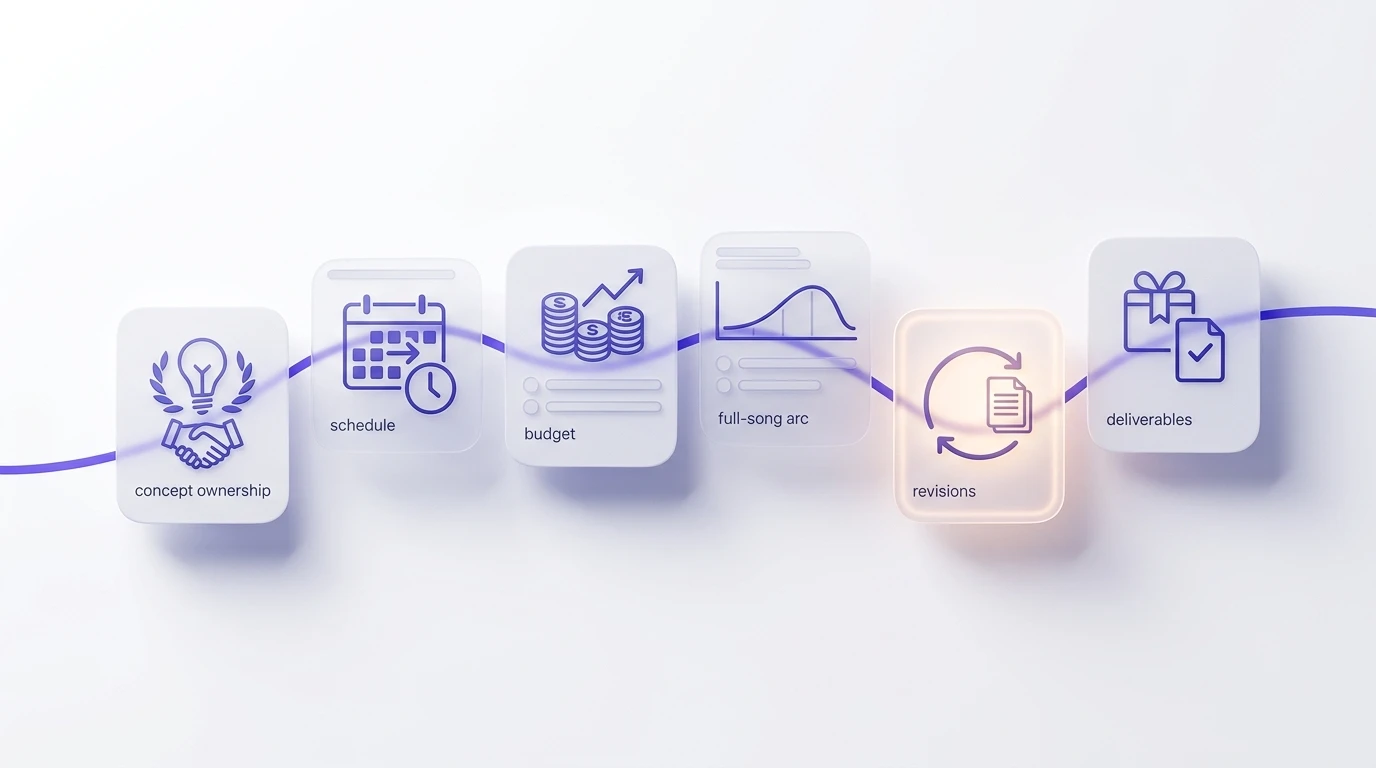
One transparent reference point is SongTrailer's AI music video package for artists, which lists a $3,500 flat package with delivery in about 5-7 business days after intake and direction lock. It includes a full-song master and social-ratio adaptation. One creative director owns concept, pacing, and delivery through the final edit.
Compare providers by scope. A low generation fee may exclude treatment development, character design, editorial assembly, cleanup, color work, revisions, or alternate ratios. Use a detailed video production company selection framework to check who owns each decision and what the quote actually delivers.
Production should begin with the final audio file, accurate lyrics, release date, artist and label credits, visual references, logo files, delivery specifications, and any restrictions on likeness or subject matter. The team should also define who can approve direction and how refinement rounds work.
Rights require careful separation. Review the rights covering the song, uploaded source material, generated output, fonts and logos, and every recognizable person depicted. Tool terms vary, so commercial-use permission should be checked against the exact plan and model used for production.
Copyright protection also depends on jurisdiction and the role of human authorship. The U.S. Copyright Office report on AI copyrightability explains that human-authored selection, arrangement, and modification may qualify for protection, while purely machine-generated material does not receive the same treatment under U.S. law.
Artist likenesses need explicit approval. The same caution applies to performers, actors, public figures, and voice replicas. SAG-AFTRA's artificial intelligence resources provide useful context around consent and digital replicas, even when a project falls outside a union production.
What AI filmmaking commonly gets wrong
The most common failure is visual inconsistency disguised as variety. Every new scene introduces a different face, lens, lighting setup, or rendering style. The film feels like a compilation of model demonstrations rather than one directed work.
A second failure is generating too much footage before the visual rules are approved. More output creates more review work, yet it does not repair a weak concept. Test the hardest requirement first, especially a recurring face, a specific transformation, or a location that must appear throughout the film.
Literal lyric illustration also becomes predictable. Showing rain whenever the singer mentions rain reduces the image to a caption. Better direction identifies the song's emotional mechanism, then builds a visual metaphor that can change over time.
Weak refinement terms cause practical trouble near delivery. Define what counts as a revision. Replacing a shot, changing the overall style, adjusting a title card, and correcting an export are different kinds of work. They should not sit inside one vague promise of unlimited changes.
The final mistake is treating the primary master as the end of production. Confirm audio sync, compression, titles, legal copy, frame edges, color consistency, and social crops before release. Watch each export from start to finish. File names and codecs deserve the same attention as the hero shot.
Frequently Asked Questions
What is the difference between videography and video production?
Videography usually describes camera capture and related on-set work. Video production covers the wider process, including concept development, directing, asset creation, editing, post-production, approvals, and delivery.
How much does a videographer cost for a music video?
The cost depends on crew size, equipment, locations, production days, post-production, and deliverables. Ask for a scope-based quote that separates pre-production, capture or generation, editing, revisions, and final masters.
What is the best tool for editing an AI-assisted music video?
The best tool is the professional nonlinear editor the editor can operate quickly and reliably. Adobe Premiere Pro, DaVinci Resolve, and Final Cut Pro can all handle picture editing, while advanced compositing may require a dedicated effects application.
What does the 80/20 rule mean in video editing?
Editors often use the phrase to describe concentrating effort where viewers will feel it most. For music videos, that usually means protecting the opening, hooks, major transitions, hero shots, and final sequence before polishing less critical frames.
AI-assisted production can carry a finished song when the process has firm direction, a locked visual system, disciplined editing, and defined delivery terms. If you are preparing a serious single or EP release, get in touch with SongTrailer's creative director to discuss the track, release timing, and visual scope.