Robert Palmer music videos turn repetition into a visual hook. In "Addicted to Love," matching dark dresses, slicked-back hair and restrained movement frame Palmer's suited performance. "I Didn't Mean to Turn You On" and "Simply Irresistible" develop that signature. Watch how the image stays coherent while the performance changes.
- In "Addicted to Love," repeated styling directs attention toward Palmer. Establish a clear focal point before adding more scenes.
- Keep a recognizable visual rule across the full song, then change framing or movement when the musical arrangement shifts.
- Test your defining composition in both widescreen and vertical crops before committing to the shot plan.
Which Robert Palmer music videos should you watch?
Start with "Addicted to Love," then watch "I Didn't Mean to Turn You On" and "Simply Irresistible." Together, they show how a recognizable performance setup can become a visual identity across different songs.
Watch each clip for its governing rule. Pay attention to what stays consistent even when the camera cuts.
| Video | Repeated visual rule | What to watch closely |
|---|---|---|
| "Addicted to Love" | Closely matched styling around Palmer's central performance | How the backing performers create a pattern that makes the lead stand out |
| "I Didn't Mean to Turn You On" | A related, tightly controlled band tableau | How a different groove changes the feel of a familiar visual language |
| "Simply Irresistible" | Coordinated styling and repeated group formations | How more active choreography gives the signature greater physical energy |
These clips reward comparison because their similarities are so visible. You can separate the underlying concept from the decisions that make each song feel different.
Why does the repeated image hold your attention?
Repetition gives the viewer a stable pattern. Once matching figures establish that pattern, a different gesture or expression becomes easier to notice.
In "Addicted to Love," Palmer has a distinct role within the frame. He sings directly to the viewer while the backing performers maintain a more uniform presence. Their styling creates visual order, leaving his face and delivery to carry the personality.
That hierarchy matters. If every performer competed equally for attention, the composition would lose its clear center.
The same principle helps explain why certain images belong in a discussion of the greatest music videos of all time: the defining relationship between the figures remains recognizable even when individual edits fade from memory. Palmer's setup can be recalled as a single composition.
Repetition also makes small changes feel larger. A tighter shot carries more weight when the surrounding visual world remains controlled. You can raise intensity without introducing another location or a new storyline.
How do the follow-up videos change the formula?
"I Didn't Mean to Turn You On" preserves the formal performance language associated with "Addicted to Love." That continuity lets the song's different rhythmic character do more of the work. The viewer recognizes the world without needing the same emotional response from it.
"Simply Irresistible" pushes the group presentation toward more active choreography. Coordinated bodies supply more of the energy, while Palmer remains the recognizable lead.
The distinction is useful for creative direction. A visual identity needs fixed elements and room to move. Keeping the wardrobe language consistent does not require identical blocking, which is the planned placement and movement of performers.
Compare Palmer's controlled presentation with Janet Jackson's choreography-led visual eras, where synchronized movement often carries much more of the performance. Similar tools can produce very different relationships between the lead artist and the group.
There is also a limit worth recognizing. Palmer's famous staging presents the women as almost interchangeable visual elements. A contemporary treatment should make a deliberate choice about that convention. We recommend preserving the compositional discipline while giving supporting performers meaningful presence and agency.
Build a full-song concept around a repeatable rule
A repeatable rule is a decision that holds the video together across different shots. It might govern the artist's position in the frame or how light moves through a location.
For an artist with a finished track and an approaching release date, that constraint can keep the production manageable. A smaller visual world can reduce location and wardrobe demands. It still needs enough development to carry the entire song.
Put the rule into the treatment, the written creative plan used in music videography from treatment to final master, before filming or generating shots. Everyone making the images needs to understand which details must remain stable.
A worked example: waiting for a call
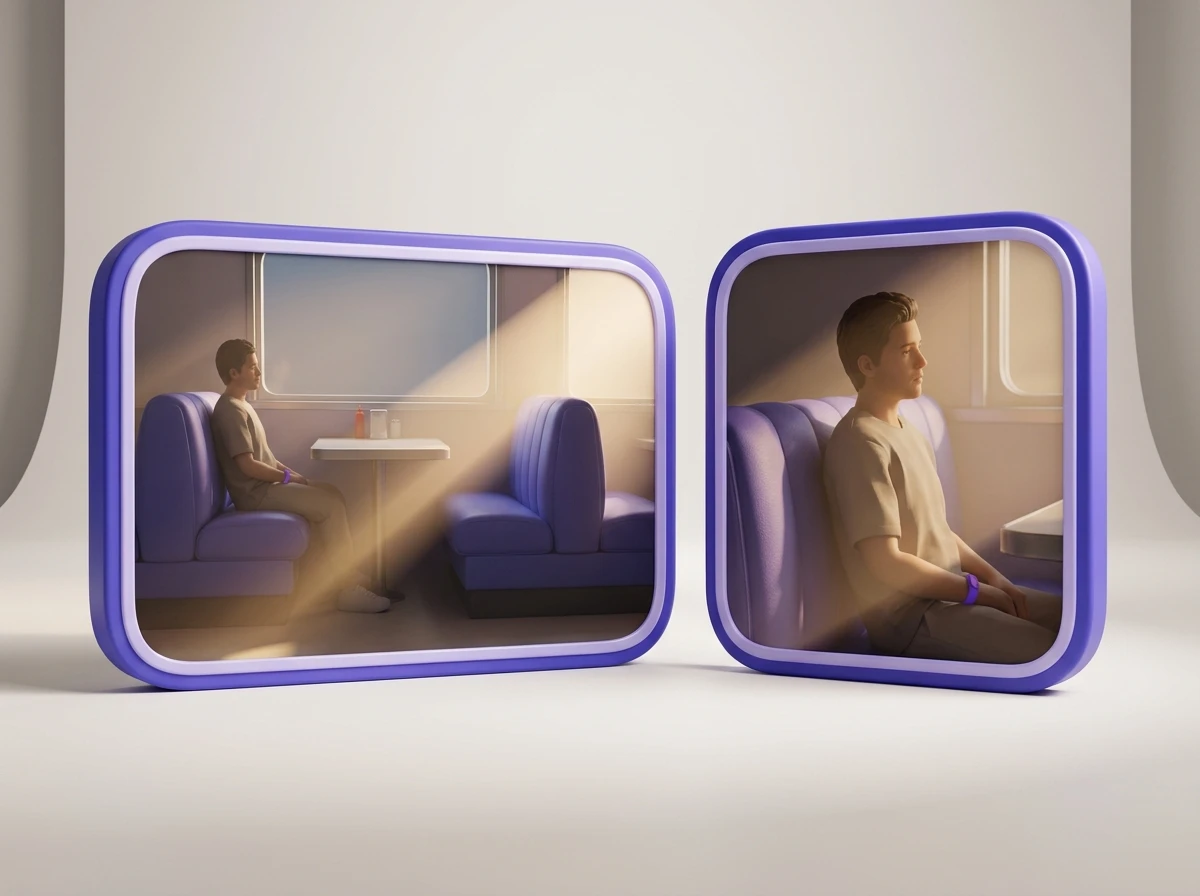
Consider an electronic-soul single about waiting for someone who never calls. I'd place the singer in an empty late-night diner, seated in the same booth throughout. Passing headlights provide the recurring movement.
During the verses, wider frames leave the opposite seat conspicuously empty. The chorus returns to a consistent close-up as headlights cross the singer's face. The familiar light becomes part of the hook.
At the bridge, the moving reflections stop. Hold the stillness. When the final chorus arrives, return to the original wide composition, with the singer now looking directly into the lens.
The emotional change comes from performance and framing. The location remains stable, which gives the final look somewhere to land.
Copy this treatment template
Fill this in before building a shot list. Keep the fixed rule specific enough that another director or editor could follow it.
Track:
Central feeling:

Visual world:
Describe the location and its connection to the song.

Fixed visual rule:
State what must remain consistent across the video.

Recurring action or image:
Choose a motif that can return at meaningful musical moments.

Verse treatment:
Describe the baseline framing and performance.

Chorus treatment:
State what changes when the hook arrives.

Bridge or contrasting section:
Choose which established element changes or disappears.

Final section:
Describe the last development in the visual idea.

Continuity checks:
Name the appearance and environmental details that must match.

Crop test:
Explain what must remain visible in widescreen and vertical.
For AI-assisted visuals, the fixed rule also becomes a continuity check. Compare each selected shot against the treatment. A changed face, altered costume or shifting room layout can break the world even when the individual image looks impressive.
Plan variation across the full track. Reusing a chorus composition can reinforce recognition. Repeating the same short sequence through every section can leave the video emotionally static.
Check the social framing early, too. Palmer's group compositions rely on the relationship between the lead and the surrounding performers. A narrow crop can erase that relationship, so a vertical adaptation may need a reframed composition rather than a simple center crop.
Frequently Asked Questions
Who directed Robert Palmer's "Addicted to Love" video?
British photographer Terence Donovan directed "Addicted to Love." His fashion-photography background provides useful context for its controlled posing and strong emphasis on styling.
Who were the women in the "Addicted to Love" video?
The backing performers were models Julia Bolino, Patty Kelly, Kathy Davies, Mak Gilchrist and Julie Pankhurst. They portray the instrumental band behind Palmer.
What band was Robert Palmer in before his solo career?
Palmer sang with Vinegar Joe alongside Elkie Brooks before establishing his solo career. The Power Station was a later project, so its videos sit alongside his solo work rather than preceding it.
Replace the diner's passing headlights with a recurring image that belongs to your finished track, then lock the visual rule before production. SongTrailer combines human direction with AI-assisted visuals to develop a concept into a full-song master and social-ratio adaptation. If you want help carrying that brief through the edit, get in touch.